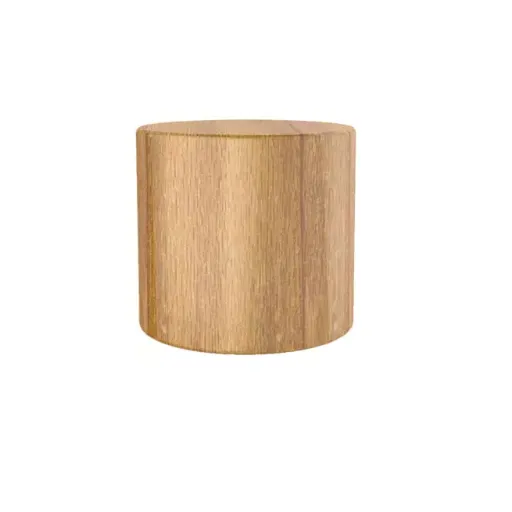
Wooden perfume caps are outer closures made from natural wood, usually paired with a plastic or aluminum inner seal, that give fragrance bottles a premium, sustainable, and tactile finish. For niche and luxury perfume brands, they have become one of the fastest ways to signal quality and environmental responsibility on a crowded shelf.
When Elena launched her small fragrance house in Barcelona in early 2025, she knew the juice inside the bottle mattered. What she underestimated was how much the cap would influence first impressions. After switching from a standard plastic closure to a laser-engraved walnut cap, her wholesale inquiries jumped 34% in one quarter. Buyers told her the wood “felt expensive before they even smelled it.”
That is the power of the right wooden perfume cap. Whether you need custom wooden perfume caps for a niche launch or sustainable perfume caps for an eco-conscious line, the material you choose sends a message before the first spray. This guide will show you how to choose the right wood, finish, and supplier so your caps protect your fragrance and elevate your brand.
Key Takeaways
- Wooden perfume caps combine a natural wood shell with a PP or ABS inner seal to prevent alcohol vapor damage and ensure a secure fit.
- Ash, beech, oak, walnut, and rosewood are the most common luxury options, with bamboo and rubberwood offering budget-friendly alternatives.
- Popular finishes include natural stain, carbonized Shou Sugi Ban, vintage wash, matte open pore, and laser-engraved branding.
- Critical QC specs include 8–12% moisture content, ±0.5mm dimensional tolerance, and pull force above 30 Newtons.
- Always verify FSC, ISO9001, or BSCI certifications and request samples before committing to a full production run.
What Are Wooden Perfume Caps?
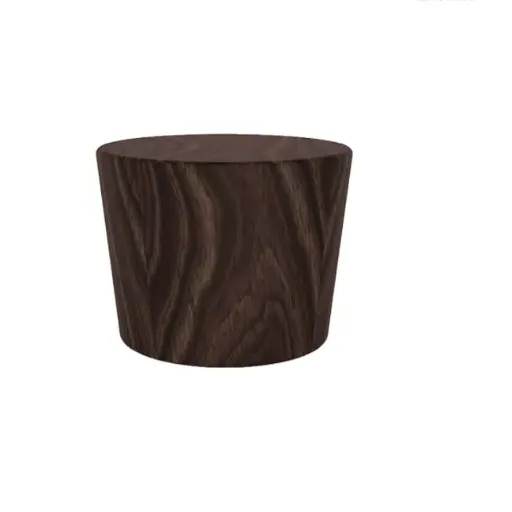
A wooden perfume cap is a closure system for fragrance bottles where the visible exterior is crafted from natural wood. Inside, most designs use a polypropylene (PP) or ABS plastic insert. The insert does the actual sealing work. It creates the snap or threaded fit that keeps the cap in place and limits evaporation.
This two-part construction matters because wood alone cannot form a reliable friction fit. Wood expands and contracts with humidity, and it reacts to temperature swings.
A precision-molded inner component solves both problems. The wood provides the look and feel. The inner seal provides the function.
The most common neck standard is FEA 15mm, though some bottles use FEA 13mm or 18mm. Before you order, confirm your bottle neck size. A cap that fits beautifully on one bottle can sit loose or crooked on another.
For a broader look at how wood compares to other cap materials, see our complete guide to perfume tops and caps.
Why Choose Wooden Perfume Caps for Your Fragrance Brand?
Premium Perception Without Premium Waste
Wood carries instant associations: nature, craftsmanship, authenticity. Unlike molded plastic, every wooden cap has a unique grain pattern. That variation tells customers your product is not mass-produced.
According to Fortune Business Insights, the global perfume packaging market is projected to grow from 3.96billionin2026to3.96billionin2026to6.89 billion by 2034. Much of that growth is driven by premium and sustainable packaging choices. Wooden caps sit right at the intersection of those two trends.
Sustainability That Customers Can See
Sustainable packaging is no longer a nice-to-have. Research shows that 74% of global consumers are willing to pay more for eco-friendly packaging, and 54% prefer packaging made from renewable materials. Wood is biodegradable, renewable, and can be sourced from responsibly managed forests.
When a brand chooses FSC-certified wood, it gains a verifiable story to tell. That story shows up in marketing, on shelf talkers, and in the unboxing videos customers post online.
A Better Unboxing Experience
Luxury is tactile. A wooden cap is heavier, warmer, and smoother than plastic. It makes the moment of opening a bottle feel deliberate. For niche fragrances sold at $150 or more, that sensory detail can justify the price in the customer’s mind.
Want to see how a wooden cap would feel for your line? Contact us today for a free sample.
Best Wood Types for Wooden Perfume Caps
Not all wood is equal when it comes to perfume packaging. Density, grain, workability, and cost all play a role. Below is a practical guide to the most common species used for luxury wooden perfume caps and budget-friendly alternatives.
| Wood Type | Price Tier | Density (g/cm³) | Best For |
|---|---|---|---|
| Ash | Mid-to-high | 0.60–0.72 | Staining to show deep grain |
| Beech | Mid-to-high | 0.70–0.80 | Solid color painting, smooth finish |
| Oak | Mid-to-high | 0.60–0.75 | Niche, heritage-style branding |
| Walnut | High | 0.65–0.70 | Natural dark elegance without stain |
| Rosewood | Luxury | 0.82–0.94 | Limited editions and ultra-premium lines |
| Maple | Mid | 0.55–0.65 | Light, minimalist brand aesthetics |
| Bamboo | Budget-mid | Variable | Eco-focused, cost-conscious brands |
| Rubberwood | Budget | 0.60–0.68 | Low-cost promotional caps |
| Pine | Budget | 0.40–0.50 | Aromatherapy and natural-positioning products |
Ash and Beech: The Workhorses
Ash and beech are the most popular choices for custom wooden perfume caps. Ash has a deep, visible grain that looks excellent under a stained finish. Beech has a fine, even texture that takes solid paint colors beautifully. Both are hard enough to hold precise shapes and engravings.
Walnut and Rosewood: The Luxury Play
Walnut needs little or no stain. Its natural chocolate-brown tone reads as expensive. Rosewood is even more exclusive, with a dense structure and rich color. It is best reserved for limited editions or ultra-luxury fragrances where unit cost is less of a constraint.
Bamboo: The Sustainability Statement
Bamboo grows rapidly and regenerates after harvest. That makes it attractive for eco-conscious brands. However, bamboo requires special anti-mold treatment and often needs carbonization to improve stability. Skipping these steps can lead to warping or discoloration later.
Wooden Perfume Cap Finishes and Customization Options
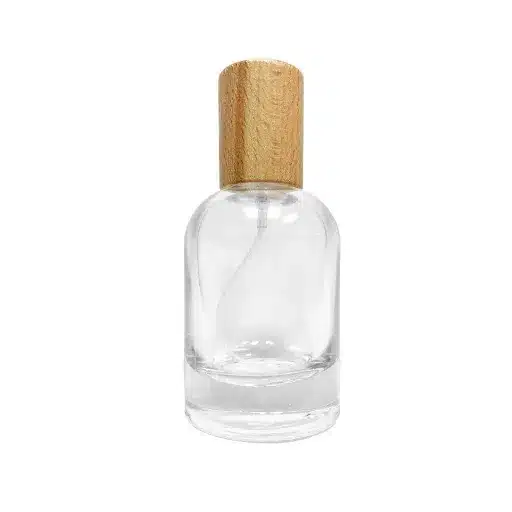
The finish on a wooden cap is where branding comes alive. Here are the most common options available from custom manufacturers.
Natural Stain and Lacquer
A transparent or semi-transparent stain enhances the wood grain while adding color. A clear lacquer or varnish adds protection against moisture, oils, and alcohol vapor. Gloss, satin, and matte sheens are all possible.
Carbonized / Shou Sugi Ban
This Japanese technique chars the surface of the wood, then brushes it clean. The result is a dramatic charcoal-black finish with highlighted texture. It works especially well on ash and cedar and gives a fragrance line a bold, modern identity.
Vintage / White Wash
A vintage wash creates a weathered, driftwood-like appearance. It suits brands with a rustic, artisanal, or beach-inspired positioning. The finish softens the grain and makes each cap look hand-finished.
Matte Open Pore
An open-pore finish leaves the wood texture exposed. It feels raw and natural. While beautiful, it offers less protection than sealed finishes. It works best for display-focused bottles rather than products that will travel in handbags.
Laser Engraving and Branding
Laser engraving is the most reliable way to add logos or text to wood. Unlike screen printing, it does not bleed into open grain. The burn creates a permanent, high-contrast mark that feels integrated into the material.
Looking for custom engraving or a unique finish? Request a design consultation and free quote.
Wooden vs. Plastic vs. Metal Perfume Caps
Choosing a cap material is a trade-off between cost, perception, sustainability, and function. The table below summarizes how each material compares.
| Factor | Wooden Caps | Plastic Caps | Metal (Zamac) Caps |
|---|---|---|---|
| Luxury perception | High | Low to moderate | Very high |
| Sustainability | Excellent | Poor | Moderate |
| Unit cost | Moderate to high | Low | High |
| Customization | Excellent | Good | Good |
| Durability | Good with proper sealing | Prone to cracking | Excellent |
| Weight | Medium | Light | Heavy |
| Lead time | Moderate | Fast | Moderate |
| Best use case | Premium and eco brands | Mass market | Ultra-luxury fragrances |
Wood sits in a sweet spot. It feels more premium than plastic but costs less than solid Zamac metal. It also carries a stronger sustainability story than either alternative.
For a deeper dive into material trade-offs, read our full comparison of perfume cap materials.
Technical Specifications and Quality Control
Wooden caps are beautiful, but they are also organic materials that move. Without proper specs, you risk warping, cracking, loose fits, or discoloration. Here are the quality checkpoints every buyer should understand.
Moisture Content: 8–12%
This is the most critical spec. Above 14% moisture, wood can mold. Below 7%, it becomes brittle and may crack.
Reputable manufacturers dry wood to 8–12% before machining. Ask for a moisture content report with your sample batch.
Dimensional Tolerance: ±0.5mm
Sanding and machining should hold the outer dimensions within ±0.5mm. Tighter tolerances are possible for high-end work, but they raise cost. For standard perfume caps, ±0.5mm is the industry baseline.
Pull Force: Above 30 Newtons
The bond between the wood shell and the inner insert must withstand at least 30 Newtons of pull force. A weak bond means the wood can separate from the insert when the cap is removed. This is one of the first tests to run on samples.
Thermal Cycle Testing
Good manufacturers run a 48-hour thermal cycle from -20°C to +60°C. This simulates shipping conditions and seasonal storage. Caps that pass this test are unlikely to fail in real-world use.
Inner Seal Compatibility
Always confirm the inner seal material. PP is standard for alcohol-based fragrances because it resists corrosion. Some designs use an aluminum ring for added structure and weight. Match the inner material to your formula and bottle neck.
How to Source Wood Perfume Caps Wholesale from Manufacturers
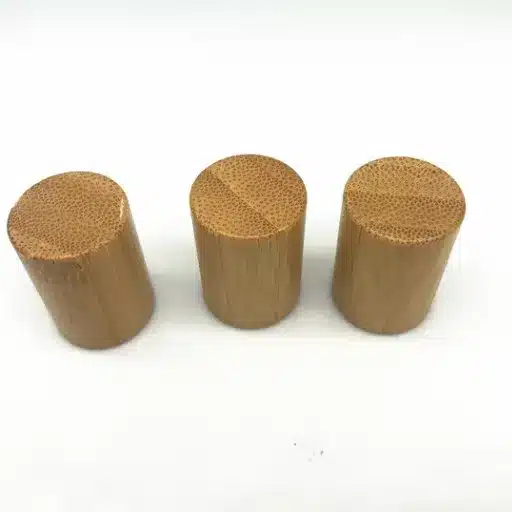
Finding a supplier is easy. Finding the right supplier takes a checklist. Here is how to evaluate wood perfume caps wholesale manufacturers with confidence.
Verify Certifications
Look for FSC certification for responsible wood sourcing, ISO9001 for quality management, and BSCI or SA8000 for social compliance. These certifications reduce risk and strengthen your brand’s sustainability claims.
Request Physical Samples
Never commit to a full order based on photos alone. Request samples in your target wood, finish, and shape. Test the fit on your actual bottle. Check the grain consistency, color match, and engraving quality.
Understand MOQs and Tooling
Standard MOQs for custom wooden perfume caps typically start around 3,000 pieces for custom shapes. Standard shapes like cylinders or cubes may be available at 1,000 pieces. New molds or tooling may add a one-time fee. Clarify this before quoting.
Review the Production Timeline
Woodworking takes longer than plastic injection molding. A typical custom wooden cap order runs 30–45 days after sample approval. Rush orders are possible, but they often compromise quality or increase cost.
Evaluate Communication and Support
The best suppliers ask questions about your bottle, your fragrance formula, and your target market. If a supplier only sends a price list without understanding your project, keep looking.
Marcus, a product manager for a mid-size fragrance brand, learned this the hard way. He chose the lowest quote for a 10,000-piece wooden cap order. The caps arrived on time but with moisture content above 16%.
Within two months, several caps warped and cracked in humid markets. The reorder cost him more than the initial savings. Now his spec sheet always lists moisture range, pull force, and thermal cycle requirements.
Need a supplier who asks the right questions? Talk to our team about your wooden perfume cap project.
Common Mistakes When Ordering Wooden Perfume Caps
Even experienced brands make errors when sourcing wood caps. Avoid these five pitfalls.
- Skipping the inner seal spec. The wood shell is decorative. The inner seal does the work. Specify material, fit, and pull force.
- Ignoring moisture content. Without a target range, suppliers may ship wood that is too wet or too dry for your climate.
- Choosing the wrong wood for the finish. Open-grain woods like ash are great for stain but harder to paint. Beech is better for solid colors.
- Underestimating lead time. Wood caps cannot be rushed like plastic. Build 30–45 days into your launch schedule.
- Overlooking colorfastness. Some woods change color when exposed to sunlight or alcohol vapor. Request accelerated aging tests for critical launches.
Frequently Asked Questions
What are wooden perfume caps made of?
Wooden perfume caps are made from natural wood species such as ash, beech, oak, walnut, or bamboo. They usually include a PP or ABS plastic inner seal to prevent alcohol vapor contact and ensure a secure fit on the bottle.
Are wooden perfume caps eco-friendly?
Yes. Wood is biodegradable, renewable, and can be sourced from responsibly managed forests through FSC certification. Compared to virgin plastic, it has a lower environmental impact and supports circular packaging goals.
Can wooden perfume caps be customized?
Absolutely. You can customize the wood species, shape, finish, color, and branding. Laser engraving is the most reliable decoration method for logos and text. Some manufacturers also offer screen printing, hot stamping, and unique finishes like Shou Sugi Ban.
How much do luxury wooden perfume caps cost?
Costs vary by wood species, finish complexity, order volume, and tooling. Budget woods like rubberwood or pine may start under $0.50 per unit at high volumes. Premium woods like walnut or rosewood can run several dollars per unit. Custom shapes and finishes add cost.
What is the typical MOQ for wooden perfume bottle caps?
Standard MOQs are usually 3,000 pieces for custom shapes. Stock or standard shapes may be available at 1,000 pieces. Some suppliers offer lower MOQs for an added per-unit cost.
Are wooden caps more expensive than plastic caps?
Generally yes. Wood costs more than injection-molded plastic because of material and machining time. However, many brands find the higher perceived value justifies the difference, especially for fragrances priced above $80 per bottle.
Where can I buy wooden perfume caps in bulk?
You can source wooden perfume bottle caps in bulk from specialized packaging manufacturers in China, Vietnam, and Europe. Look for suppliers with FSC or ISO9001 certification and request samples before placing a large order.
Do wooden caps affect the fragrance inside?
No. A properly designed wooden cap uses an inner seal that prevents direct contact between the wood and the perfume liquid. As long as the seal is intact, the fragrance remains unaffected.
Conclusion
Wooden perfume caps offer fragrance brands a rare combination of luxury perception, sustainability credibility, and design flexibility. They turn an ordinary closure into a tactile brand moment. But success depends on the details: the right wood species, the right finish, the right inner seal, and the right supplier.
To recap:
- Match the wood to your brand position and finish goals.
- Specify moisture content, dimensional tolerance, and pull force in your purchase order.
- Verify certifications like FSC and ISO9001.
- Always test samples on your actual bottles before full production.
At Fuzhou Longlu Packaging Co., Ltd., we help fragrance brands design and manufacture custom wooden perfume caps that protect the product inside and elevate the brand outside. From wood selection to laser engraving, we guide you through every step.
Ready to make your fragrance packaging unforgettable? Contact us today for a free sample and custom quote. Let’s build wooden perfume caps that your customers will want to keep long after the last drop.