The perfume cap manufacturing process turns raw materials into the sealed, finished closure that protects a fragrance and defines its first impression. Most caps are produced through injection molding for plastic, die casting for Zamac and aluminum, or CNC cutting and polishing for crystal and wood. Each method follows a similar path: design, mold or tooling creation, primary forming, surface finishing, decoration, assembly, and quality control.
A loose or poorly finished cap can ruin a luxury unboxing experience before the customer ever smells the scent. That small piece of metal, plastic, or wood carries more brand weight than its size suggests.
In this guide, you will learn how each major perfume cap material is manufactured, which process fits different brand budgets and volumes, and what quality standards to demand from a supplier. We will also look at the sustainability trends reshaping fragrance closures in 2026.
Key Takeaways
- The perfume cap manufacturing process has eight core stages: design, tooling, forming, deburring, surface treatment, decoration, assembly, and quality control.
- Zamac die casting dominates luxury metal caps, while injection molding is the standard for plastic and Surlyn caps.
- Crystal and wood caps require specialized CNC or manual cutting and always need an inner liner to protect against fragrance ethanol.
- Quality standards include ±0.05mm dimensional tolerance, 500–1,000-hour salt spray testing, and REACH/RoHS chemical compliance.
- Sustainability is now a baseline expectation: refillable systems, mono-material designs, FSC-certified wood, and PCR plastics are leading the 2026 market.
What a Perfume Cap Must Do Before Manufacturing Begins
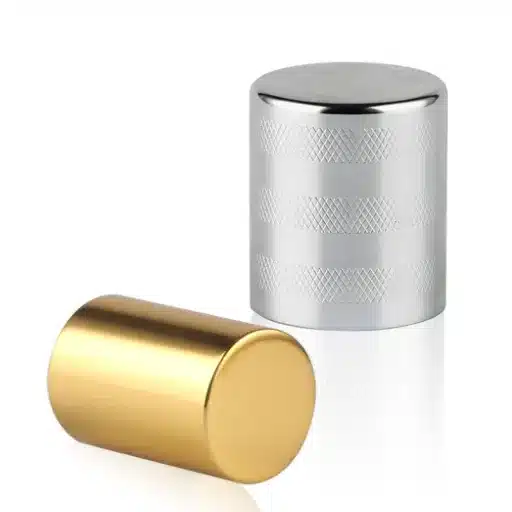
A perfume cap is not just decorative. It must create an airtight seal, resist corrosion from fragrance alcohol, fit the bottle neck precisely, and survive repeated opening and closing. It also communicates brand value through weight, texture, color, and detail.
Before any machine runs, engineers define three things:
- Neck finish standard. Most perfume bottles use FEA 15, FEA 13, or FEA 20 neck sizes. The cap thread or crimp must match exactly.
- Material choice. This drives the manufacturing method, cost, lead time, and perceived luxury level.
- Surface and decoration requirements. Plating, painting, engraving, or inlay all add steps and affect tooling.
When Elena, a fragrance brand founder in Miami, switched from an off-the-shelf plastic cap to a custom Zamac closure, her wholesale partners reported fewer returns and higher shelf appeal. The cap cost more per unit, but the perceived value increase justified a 15% higher retail price.
How Perfume Caps Are Manufactured: The 8-Step Process
Almost every perfume cap manufacturing process follows the same eight-stage workflow. The exact equipment and time vary by material, but the sequence stays consistent.
1. Design and 3D Modeling
Designers translate a brand concept into 2D drawings and 3D CAD files. Engineers add draft angles, wall thickness, and shrinkage compensation so the part can be molded or cast without defects.
2. Mold or Tooling Development
Steel molds for injection molding or die casting typically take 15–45 days. CNC machining centers and electrical discharge machining (EDM) cut the cavity to precision levels as tight as 0.005mm. For wood or crystal caps, custom jigs and diamond-tipped tooling replace traditional molds.
3. Primary Forming
- Injection molding melts plastic pellets and injects them under pressure.
- Die casting forces molten Zamac or aluminum into a steel mold.
- CNC cutting shapes solid crystal, wood, or metal blanks.
- Blow molding creates lightweight hollow plastic caps.
4. Deburring and Surface Preparation
Excess material, flash, and gate marks are removed. Parts are polished or sandblasted to prepare for plating or coating.
5. Surface Treatment
Electroplating, physical vapor deposition (PVD), spray painting, powder coating, or anodizing create color, shine, and corrosion resistance.
6. Decoration
Laser engraving, hot stamping, embossing, screen printing, or gemstone inlay add logos, patterns, and tactile details.
7. Assembly
Inner liners, magnets, sleeves, and decorative inserts are added. The liner is critical: it creates the seal between the cap and the bottle neck.
8. Quality Control and Packaging
Caps are inspected for fit, finish, dimensions, and function. Approved batches are packed in protective trays for shipment.
Perfume Cap Materials and Their Manufacturing Methods
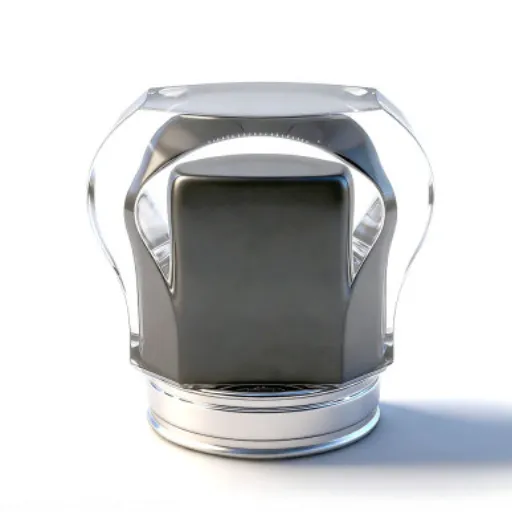
The material choice is the single biggest factor in the perfume cap manufacturing process. Each material delivers a different look, feel, cost, and environmental profile.
Plastic and Surlyn Caps: Injection Molding
Plastic perfume caps are produced by injection molding. ABS, PP, acrylic, or Surlyn resin pellets are heated to 200–250°C and injected into a precision mold. Cooling channels in the mold solidify the part in 10–15 seconds for high-quality tooling, or 20–30 seconds for lower-grade molds.
Plastic caps suit mass-market fragrances, limited budgets, and complex shapes that would be expensive in metal. They can be colored in the resin, painted, metallized, or left transparent.
Best for: High-volume launches, cost-sensitive brands, colorful or transparent designs.
Limitations: Lower perceived luxury; can feel lightweight; surface coatings may wear faster than metal plating.
Zamac and Zinc Alloy Caps: Die Casting
Zamac, also called Zamak, is a zinc-aluminum-magnesium-copper alloy prized for its weight, castability, and premium feel. The Zamac perfume cap manufacturing process starts with high-pressure die casting. Molten alloy is injected into a hardened steel mold, cooled, ejected, deburred, and then polished.
After polishing, the cap receives surface treatment. PVD coating, nickel or chrome plating, and gold electroplating are common. A plastic or silicone inner liner is inserted to prevent the metal from contacting the fragrance alcohol.
Best for: Mid-to-luxury fragrances, heavy substantial closures, detailed relief designs.
Limitations: Higher tooling cost; multi-layer plating can complicate recycling; longer lead times than plastic.
Aluminum Caps: Die Casting or CNC Machining
Aluminum offers a lighter, modern alternative to Zamac. It can be die cast for volume or CNC machined for precision. Anodizing creates durable, scratch-resistant color finishes in matte or satin textures.
Best for: Contemporary brands, recyclable closures, lightweight premium designs.
Limitations: Less heft than Zamac; complex shapes may require more machining time.
Crystal and Glass Caps: Cutting, Grinding, and Polishing
Crystal perfume caps begin as raw quartz or glass blanks. Diamond-tipped tools cut slabs, then CNC machines or manual craftsmen shape the exterior. Drilling the bore is the riskiest step: without proper coolant, feed rate, and axis orientation, crack rates can exceed 25–35%.
After shaping, the cap is polished to a smooth finish and an inner liner is bonded with structural adhesive. Manufacturers aim for 75–85% usable blanks from premium raw material.
Best for: Ultra-luxury fragrances, limited editions, heirloom positioning.
Limitations: High material loss; higher cost; heavier and more fragile than other options.
Wood Caps: Carving, Shaping, and Finishing
Wood caps are carved or CNC shaped from beech, walnut, ash, maple, or bamboo. They are then sanded, laser engraved, and sealed. A PP inner liner is essential because untreated wood can absorb fragrance ethanol, swell, and deform.
Wood communicates sustainability and artisanal quality. It has become especially popular as brands move away from multi-material caps that are hard to recycle.
Best for: Eco-conscious brands, natural and niche fragrances, FSC-certified storytelling.
Limitations: Requires liner engineering; moisture and temperature sensitivity; natural variation in grain.
Surface Treatments and Decoration Techniques
Surface finishing is what separates a plain cap from a luxury closure. The most common treatments include:
- Electroplating. Deposits a thin metal layer such as gold, silver, nickel, or chrome for shine and corrosion resistance.
- PVD coating. A vacuum process that creates wear-resistant finishes in gold, rose gold, black, or gunmetal.
- Spray painting and baking. Offers unlimited color options, matte or glossy effects, and gradients.
- Powder coating. Durable, even coating often used on aluminum.
- Laser engraving. High-precision logos and patterns with no added material.
- Hot stamping. Metallic foil transferred onto the surface for branding.
- Embossing and debossing. Raised or recessed patterns that add tactile detail.
- Gemstone, leather, or veneer accents. Multi-material details for limited editions.
When Marcus, a packaging buyer for a Dubai-based fragrance house, switched from standard chrome plating to brushed PVD on his Zamac caps, the finish survived shipping tests that had previously scratched 12% of the production run. The per-unit cost rose, but reject rates dropped by nearly half.
Quality Control Standards for Perfume Caps
Quality control is not optional in perfume cap manufacturing. A single dimension out of tolerance can cause leakage, poor fit, or a cap that falls off on the shelf.
| Test | Purpose | Typical Standard |
|---|---|---|
| Dimensional tolerance | Ensures cap fits the bottle neck | ±0.05mm standard; ±0.01mm precision |
| Salt spray test | Validates corrosion resistance | 500–1,000 hours for plated finishes |
| Bottle neck fitting test | Confirms seal and thread engagement | Pass/fit on FEA standard necks |
| Air tightness / leak test | Prevents fragrance evaporation | No detectable leakage |
| Pull-off and impact test | Verifies decorative element adhesion | Meets brand specification |
| Opening and closing cycles | Tests durability | 10,000+ cycles for pump closures |
| Chemical safety | Ensures regulatory compliance | REACH, RoHS, food-contact where applicable |
Suppliers should document every batch and provide certificates on request. At Fuzhou Longlu Packaging, we inspect caps at multiple stages so defects are caught before final assembly.
Want to see how custom quality standards protect your brand? Explore our custom packaging solutions →
How to Choose the Right Perfume Cap Manufacturing Process
Choosing a manufacturing process means balancing brand positioning, volume, budget, and timeline. Use this decision framework:
| Your Priority | Best Material/Process | Why |
|---|---|---|
| Lowest unit cost at high volume | Injection-molded plastic | Fast cycles, low material cost |
| Premium weight and detail | Zamac die casting + plating | Heavy feel, complex shapes, luxury finish |
| Modern, recyclable, lightweight | Aluminum die casting or CNC | Recyclable, anodized color options |
| Ultra-luxury, limited edition | Crystal or glass | Unique, heirloom-quality appearance |
| Sustainability story | FSC-certified wood | Natural, biodegradable, on-trend |
| Fastest tooling | Plastic injection molding | 15–25 day molds vs. 25–45 days for metal |
Tooling cost is usually the largest upfront investment. Plastic molds may cost a few thousand dollars, while multi-cavity Zamac molds can run higher. Amortize that cost across your planned production volume before deciding.
Lead time also matters. A typical custom perfume cap project takes 8–12 weeks from design approval to mass production. Rush projects are possible, but they often sacrifice tooling refinement time.
Sustainability Trends in Perfume Cap Manufacturing
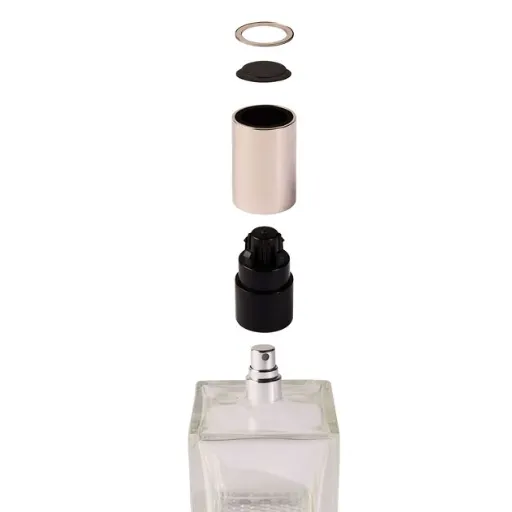
Sustainability is no longer a niche selling point. According to industry analysis, 48% of new luxury fragrance packaging prototypes currently utilize recycled or recyclable materials. Sustainable fragrance packaging is increasing at 2.7 times the rate of traditional counterparts.
Several trends are reshaping how caps are made:
- Mono-material designs. Caps made from a single material are easier to recycle than multi-layer metal-plastic combinations.
- Refillable systems. Magnetic or screw-thread caps designed for repeated use extend packaging lifespan.
- PCR plastics. Post-consumer recycled ABS and PP reduce virgin plastic use.
- FSC-certified wood. Responsibly sourced wood caps support brand environmental claims.
- Bio-resins and biodegradable materials. Emerging alternatives to conventional petroleum-based plastics.
- Low-VOC coatings. Water-based inks and lacquers reduce harmful emissions during finishing.
Major houses are already moving. Guerlain has used FSC-certified wooden closures, and Chanel collaborated with Sulapac on bio-based caps. LVMH has committed to making all packaging sustainable by 2026 through its LV Pack in Green initiative.
For smaller fragrance brands, these trends create an opportunity. A wood or aluminum cap with clear sustainability credentials can differentiate a product on crowded shelves.
Looking for sustainable packaging materials for your fragrance line? Browse our sustainable packaging options →
YouTube: Perfume Cap Manufacturing Process Explained
Note: Replace the embed URL above with your own manufacturing process video or an authoritative third-party video before publishing.
Frequently Asked Questions
What is the most common perfume cap manufacturing process?
Injection molding is the most common process for mass-market plastic caps. For luxury fragrances, Zamac die casting is the dominant method because it creates a heavy, detailed, plateable metal closure.
How long does it take to manufacture custom perfume caps?
A typical custom project takes 8–12 weeks. Mold development alone accounts for 15–45 days, depending on material and complexity. Mass production usually adds another 15–35 days.
Why do metal perfume caps need an inner liner?
The liner creates a sealed barrier between the cap material and the fragrance. It prevents alcohol from corroding metal, stops wood from absorbing ethanol and swelling, and ensures a consistent fit on the bottle neck.
Are wooden perfume caps sustainable?
Wood caps can be sustainable when sourced from FSC-certified forests and paired with a recyclable inner liner. They are also biodegradable at end of life, unlike multi-material metal-plastic caps.
What quality tests should I request from a perfume cap supplier?
Request dimensional reports, salt spray test results, leak tests, pull-off tests, and REACH or RoHS compliance certificates. These confirm that the cap will perform and meet regulatory requirements.
Conclusion
The perfume cap manufacturing process is where engineering, design, and brand perception meet. Whether you choose injection-molded plastic for scale, Zamac die casting for luxury weight, or FSC-certified wood for sustainability, each material demands the right process and quality controls.
The brands that win on shelf are the ones that treat the cap as part of the fragrance experience, not an afterthought. That means selecting the right material, demanding documented quality tests, and aligning the closure with your brand values.
At Fuzhou Longlu Packaging, we help fragrance brands manufacture custom caps that protect the product and elevate the unboxing moment. From design and tooling to surface finishing and quality inspection, our team guides you through every stage of the process.
Ready to start your custom perfume cap project? Contact us today for a free quote →