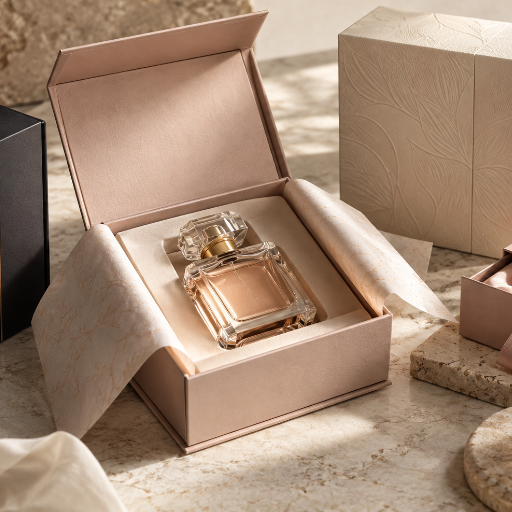
Eco-friendly rigid boxes are premium packaging structures built with recycled or certified materials, designed for end-of-life recyclability, and produced using low-impact processes. They use FSC-certified greyboard cores, plastic-free wraps, and compostable inserts instead of standard chipboard, laminated finishes, and EVA foam. The result is packaging that protects your product and your brand’s environmental reputation.
The problem: “Eco-friendly” has become one of the most abused marketing terms in packaging. A rigid box can claim to be “green” simply because its greyboard contains 70% recycled fiber. That is a baseline, not a differentiator. The real sustainability story lies in what buyers rarely see: the wrap paper, the coating, the insert, and whether the entire package can actually be recycled by the person who opens it.
When Clara Chen launched her skincare line in early 2025, she ordered 2,000 rigid boxes from a supplier who promised “eco-friendly materials.” The boxes looked beautiful. But when a customer asked whether the soft-touch lamination and EVA foam insert were recyclable, Clara discovered the truth. The lamination was BOPP plastic. The foam was polyurethane. Neither could be separated from the paperboard at standard recycling facilities. Her “eco-friendly” boxes were heading straight to landfill. She had to redesign her entire packaging line six months after launch, at a cost of $8,400 she had not budgeted for.
This guide exists to prevent that scenario. By the end, you will understand what makes a rigid box genuinely sustainable, which materials and certifications matter, what the real cost premiums are, and how to source from a manufacturer who can back up every claim with documentation.
Key Takeaways
- Eco-friendly rigid boxes are defined by four pillars: sustainable core material, responsible wrap and print, recyclable inserts, and end-of-life recyclability. Marketing labels alone are not enough.
- FSC Recycled-certified greyboard (1,000–1,400 gsm) is the most cost-effective and verifiable sustainable core material, with only a 5–15% price premium over standard board.
- The biggest sustainability mistake in rigid boxes is not the core material. It is the insert. Replacing EVA foam with molded pulp eliminates a non-recyclable component at comparable cost.
- EU PPWR (2026) and U. S. state EPR laws now mandate recyclability proof. Certifications like FSC, ISO 14001, and How2Recycle compliance are becoming baseline requirements, not premium add-ons.
- Collapsible rigid boxes reduce shipping volume by 60–80%, directly lowering freight emissions without changing the box’s unboxing quality.
- Factory-direct manufacturers in Fujian can produce FSC-certified rigid boxes with 500-unit MOQs, making sustainable packaging accessible to small and mid-size brands.
What Makes a Rigid Box Eco-Friendly?
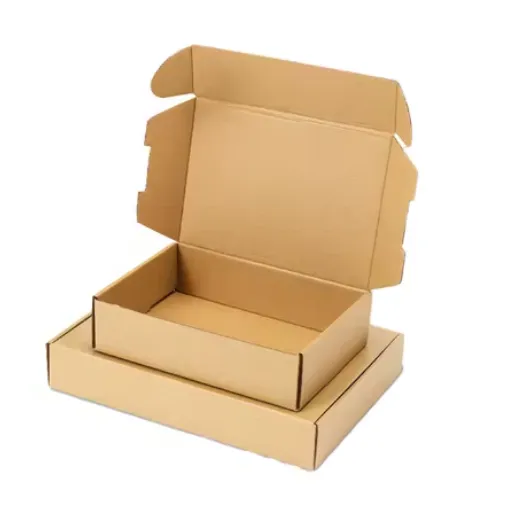
An eco-friendly rigid box is built on four pillars that work together. Skip one, and the sustainability claim falls apart.
Pillar one: the core material. Standard rigid boxes use greyboard (also called chipboard) made from recycled paper fibers. Most greyboard already contains 70–100% recycled content. The sustainability step is choosing FSC-certified recycled greyboard, which guarantees chain-of-custody traceability from waste paper to finished board.
Pillar two: the wrap and print. The paper or fabric that covers the greyboard core must also be recyclable. Plastic laminations, PVC windows, and petroleum-based inks create mixed-material packages that recycling facilities reject. Water-based inks and aqueous coatings (OPV) are the sustainable alternatives.
Pillar three: the insert. EVA foam, plastic blister trays, and non-woven fabric liners render an otherwise recyclable box non-recyclable. Molded pulp, die-cut kraft cardstock, and mycelium-based inserts are the replacements.
Pillar four: end-of-life design. The entire package must be disassemblable by the end user. A box with a magnet hidden under paper wrap cannot be recycled as paper unless the consumer tears it apart. Mono-material designs, ribbon closures, and tab-lock mechanisms solve this.
Want to see what truly sustainable rigid box construction looks like? Request a free sample pack with FSC-certified greyboard, molded pulp inserts, and aqueous coating, no commitment required.
Sustainable Material Options for Rigid Boxes
Choosing sustainable materials for rigid boxes starts with understanding what each component does and what alternatives exist. Here is a practical breakdown.
Recycled Greyboard / Chipboard Core
The structural core of every rigid box is greyboard, a thick paperboard made from layers of recycled paper pulp. Standard greyboard for rigid boxes ranges from 1,000 to 1,400 gsm (grams per square meter). The higher the gsm, the stiffer and more protective the box.
Most greyboard already contains significant recycled content. The sustainability upgrade is specifying FSC Recycled-certified greyboard, which verifies that 100% of the fiber comes from post-consumer waste and that the entire supply chain meets FSC chain-of-custody standards. The price premium is modest, typically 5–15% over non-certified recycled greyboard.
Performance note: FSC Recycled greyboard performs identically to standard greyboard on rigid box production lines. Board stiffness, warp resistance, and wrap adhesion are unchanged. There is no quality compromise.
FSC-Certified Paperboard
FSC certification has three levels, and the distinction matters:
- FSC Recycled: 100% post-consumer recycled fiber. The most sustainable option.
- FSC Mix: A blend of FSC-certified virgin fiber, recycled fiber, and controlled wood. A middle ground.
- FSC 100%: 100% virgin fiber from FSC-certified forests. Sustainable, but not recycled.
For rigid boxes, FSC Recycled is the best choice for the core. For the outer wrap, FSC-certified art paper or specialty paper is standard and widely available.
Agricultural Waste Board
Emerging alternatives use agricultural byproducts like sugarcane bagasse or wheat straw in place of wood pulp. These materials are biodegradable and carry a lower land-use footprint. However, they currently cost 15–35% more than standard greyboard and have limited availability for high-gsm rigid box specifications.
Best use case: Natural and organic brands where the unbleached, textured appearance of agricultural waste board aligns with brand identity.
Kraft Paper Wraps
Kraft paper is unbleached, uncoated, and fully recyclable. It creates a natural, tactile aesthetic that signals sustainability without needing green logos. For brands targeting eco-conscious consumers, a kraft wrap with minimal black-ink printing can be more persuasive than a glossy laminated box with a recycling symbol.
The trade-off: kraft paper has lower print vibrancy than coated art paper. High-color branding requires a different approach.
Plant-Based and Water-Based Coatings
Traditional lamination uses BOPP or PET plastic film bonded to the paper surface. This creates a non-recyclable mixed material. The sustainable alternatives are:
- Aqueous coating (OPV): A water-based, plastic-free coating that provides moderate scuff protection. It is recyclable in standard paper streams.
- Water-based adhesives: Replace solvent-based glues to reduce VOC emissions and improve recyclability.
- Soy-based and vegetable-based inks: Deliver comparable color quality to petroleum-based inks with a renewable feedstock.
When Marcus ordered his first production run of sustainable rigid boxes for his candle brand, he specified FSC Recycled greyboard, kraft wrap, and aqueous coating. His supplier delivered samples that looked and felt premium. But when he ran a humididity test, the aqueous coating softened at 85% relative humidity. His candles ship to Southeast Asia. He switched to a biodegradable lamination specifically formulated for tropical climates, which added 8% to his unit cost but preserved both sustainability credentials and product protection.
Interior Inserts: The Hidden Sustainability Factor
The insert is the most overlooked component of rigid box sustainability. A beautifully designed FSC-certified box with a polyurethane foam insert is still a landfill product.
Molded Pulp (Recycled Fiber)
Molded pulp is made from 100% recycled paper fiber, formed into custom shapes using vacuum-molded dies. It provides excellent cushioning for cosmetics, electronics, and glass products. It is recyclable in standard paper streams and industrially compostable.
Cost: Comparable to EVA foam, with a one-time die tooling cost (200–200–600 depending on complexity).
Die-Cut Kraft Cardstock
For flat products like books, cards, or flat-pack accessories, a die-cut kraft cardstock insert is the simplest sustainable solution. Fully recyclable, low cost, no tooling beyond a steel-rule die.
Mycelium (Mushroom-Based) Inserts
Mycelium packaging is grown, not manufactured. Agricultural waste is inoculated with mushroom mycelium, which binds the fibers into a solid, custom-shaped material. It biodegrades in 30–90 days in home compost conditions.
Current limitations: Higher cost (2.50–2.50–4.00 per unit), limited global production facilities (~12 as of 2026), and longer lead times (4–6 weeks). Best reserved for ultra-premium or limited-edition products.
What to Avoid
- EVA foam: Non-recyclable, non-biodegradable. Common in electronics and jewelry packaging.
- PVC windows: Creates a mixed-material package that cannot be recycled as paper.
- Plastic blister trays: Same problem as PVC. Use molded pulp trays or paperboard sleeves instead.
Certifications That Actually Matter
Certifications separate verifiable sustainability from greenwashing. Here are the ones that matter for rigid box packaging in 2026.
FSC (Forest Stewardship Council)
FSC chain-of-custody certification is the most recognized standard for paper-based packaging. It verifies that wood and paper products come from responsibly managed forests or recycled sources. Any supplier claiming FSC certification should provide a certificate number that you can verify on fsc.org.
What to ask your supplier: “What is your FSC chain-of-custody certificate number, and which certification level does this material carry: Recycled, Mix, or 100%?”
ISO 14001 Environmental Management
ISO 14001 is a manufacturer-level certification for environmental management systems. It does not certify a specific product as eco-friendly. Instead, it certifies that the factory has systematic processes for minimizing environmental impact, managing waste, and complying with regulations.
Why it matters: A factory with ISO 14001 is more likely to deliver consistent sustainability performance than one making ad-hoc claims.
REACH and RoHS Compliance
REACH (EU) and RoHS (global) restrict hazardous substances in materials and manufacturing processes. For rigid boxes, this primarily affects inks, adhesives, and any metallic components. Compliance is essential for brands exporting to the EU.
How2Recycle and Local Labeling
How2Recycle is a North American labeling program that tells consumers exactly how to recycle a package. As of 2026, California’s SB 343 restricts the use of the “chasing arrows” recycling symbol to materials that are actually recyclable in most California programs. This means rigid boxes with plastic lamination or mixed materials can no longer legally display universal recycling symbols in California without qualification.
What this means for your brand: If your rigid box contains any non-paper component (lamination, magnet, plastic window), you need accurate labeling or you risk regulatory non-compliance and consumer distrust.
BPI / EN 13432 (Compostable Claims)
These standards certify that a material will break down into water, CO₂, and biomass within a set timeframe under composting conditions. They apply to molded pulp inserts, bioplastic windows, and certain coatings. Not all “biodegradable” claims meet these standards.
Ready to verify your supplier’s certifications? Download our free Supplier Sustainability Checklist, the same 10-point audit we use to qualify our material partners.
The Cost of Sustainability: Real 2026 Pricing
Sustainability does add cost, but the premiums are smaller than most buyers expect. The key is knowing where the money goes.
Material Cost Premiums
| Component | Standard | Sustainable Alternative | Price Premium |
|---|---|---|---|
| Greyboard core | Standard recycled | FSC Recycled certified | 5–15% |
| Outer wrap | Coated art paper | FSC-certified kraft or art paper | 0–10% |
| Coating | Gloss/matte lamination | Aqueous coating (OPV) | -5 to +5% |
| Inks | Solvent-based CMYK | Soy-based or water-based | 0–10% |
| Insert | EVA foam | Molded pulp | 0% (comparable) |
| Agricultural waste board | Standard greyboard | Bagasse or wheat straw | 15–35% |
Does Sustainability Affect MOQ?
In most cases, no. FSC-certified materials are standard stock at major paper mills. A factory-direct manufacturer can produce FSC-certified rigid boxes at the same minimum order quantities as standard boxes. At Fuzhou Longlu, our MOQ for eco-friendly rigid boxes starts at 500 units, identical to our standard rigid box MOQ.
Custom sustainable inserts may require higher minimums. Molded pulp tooling is cost-effective at 1,000+ units. For runs below 1,000 units, die-cut kraft cardstock inserts are the more economical sustainable choice.
Total Cost Comparison
For a mid-size rigid box (200 x 150 x 80 mm) with FSC Recycled greyboard, FSC art paper wrap, aqueous coating, and molded pulp insert:
| Order Quantity | Standard Box | FSC-Certified Sustainable | Premium |
|---|---|---|---|
| 500 units | $4.80/unit | $5.30/unit | +10% |
| 1,000 units | $3.90/unit | $4.25/unit | +9% |
| 5,000 units | $2.80/unit | $3.00/unit | +7% |
The bottom line: A fully sustainable rigid box typically costs 7–12% more than a standard equivalent. For most brands, this premium is absorbed into the product’s margin or passed to consumers who increasingly expect and accept sustainable packaging.
Regulatory Landscape: What Brands Need to Know in 2026
Sustainability is no longer just a marketing advantage. It is becoming a legal requirement.
EU Packaging and Packaging Waste Regulation (PPWR)
The EU PPWR entered full effect in 2026. It mandates that all packaging placed on the EU market must be designed for recyclability. For rigid boxes, this means mono-material or easily separable designs. Mixed-material boxes with plastic lamination or hidden magnets face compliance challenges.
Action item: If you sell or plan to sell in the EU, request PPWR compliance documentation from your manufacturer. A FSC-certified, aqueous-coated rigid box with molded pulp insert will typically meet requirements.
U. S. State EPR Laws
Extended Producer Responsibility (EPR) laws are expanding across U. S. states. Maine, Oregon, and California have active programs. Under EPR, brands pay fees based on the recyclability and material composition of their packaging. Non-recyclable or hard-to-recycle materials incur higher fees.
Action item: Switching from laminated to unlaminated rigid boxes, and from foam to molded pulp inserts, directly reduces EPR fee liability.
The German Case Study
A German confectionery brand redesigned its Christmas advent calendar in 2025, switching from virgin fiber greyboard to FSC Recycled greyboard (1,200 gsm), replacing a PVC blister tray with molded pulp, and substituting a plastic ribbon with embossed paper. The result: a 47% reduction in cradle-to-gate CO₂ emissions, an €18,400 annual EPR fee reduction, and an 11% year-over-year repurchase rate increase. The packaging redesign paid for itself in under one production cycle.
Designing Eco-Friendly Rigid Boxes Without Sacrificing Appeal
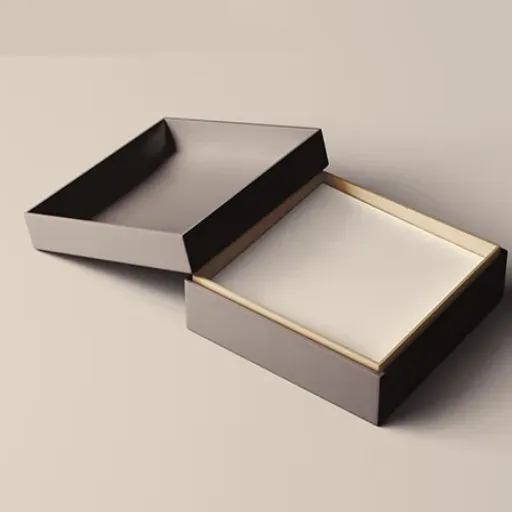
The most sophisticated sustainable brands do not lead with green messaging. They lead with design, and let the sustainability credentials support the story.
The “Quiet Sustainability” Approach
Aesop, the Australian skincare brand, built its packaging identity on uncoated, FSC-certified paper-wrapped rigid boxes with minimal black-ink branding. There are no green leaf logos. No “eco-friendly” banners. The material itself communicates the value. This approach, sometimes called quiet sustainability, resonates with premium consumers who view overt green marketing as insecurity.
How to apply it: Use natural kraft or uncoated white paper. Keep printing minimal. Let the texture and weight of the board speak. If your customer needs to be told the box is sustainable, the design may be working too hard.
Color and Print on Sustainable Materials
Water-based and soy-based inks produce vibrant results on coated papers. On uncoated kraft, they create a softer, more organic look. If your brand identity requires high-color graphics, specify FSC-certified coated art paper with soy-based inks and aqueous coating. You get full color vibrancy with full recyclability.
Finishes That Stay Sustainable
- Embossing and debossing: Add texture without adding material. Fully recyclable.
- Foil stamping: Modern recyclable-compatible foils exist. Verify with your supplier that the foil is rated for paper recycling streams.
- Skip lamination when possible: If product handling demands surface protection, choose aqueous coating over plastic film.
Collapsible Rigid Boxes: The Sustainability Multiplier
Collapsible rigid boxes ship flat and are assembled by the end user. This simple structural change delivers one of the largest sustainability gains in rigid packaging.
A standard pre-assembled rigid box occupies its full volume during shipping. A collapsible version of the same box ships as a flat pack, reducing shipping volume by 60–80%. For a brand importing 10,000 boxes from China, this can mean the difference between one shipping container and three. The carbon reduction from avoided freight is often larger than the carbon savings from material choices alone.
The unboxing experience is unaffected. Once assembled, a collapsible rigid box is structurally identical to a standard rigid box. It accepts the same wraps, prints, and inserts.
Explore how collapsible rigid boxes combine sustainability with logistics efficiency. Read our complete guide to collapsible rigid boxes.
How to Choose an Eco-Friendly Rigid Box Manufacturer
Not every manufacturer who claims sustainability can document it. Here are five verification questions to ask before placing an order.
- “What is your FSC chain-of-custody certificate number?” A legitimate supplier will provide it immediately. Verify it at fsc.org.
- “Can you specify the exact gsm and recycled content percentage of the greyboard?” Vague answers like “recycled material” are red flags. You want: “1,200 gsm FSC Recycled greyboard, 100% post-consumer fiber.”
- “What insert options do you offer besides EVA foam?” If the supplier only offers foam, they are not serious about sustainable packaging.
- “What inks and coatings do you use?” Look for soy-based or water-based inks and aqueous or biodegradable coatings.
- “Can you provide end-of-life guidance for this box?” A sustainability-focused manufacturer will tell you exactly how the box should be disassembled and recycled.
Red flags: Vague “eco-friendly” claims without certification, inability to provide material specifications, insistence on EVA foam or plastic lamination, and no documentation for EU or U. S. regulatory compliance.
Why factory-direct matters: Middlemen and trading companies often do not control material sourcing. A factory-direct manufacturer can trace every material batch to its supplier and certificate. At Fuzhou Longlu, we source FSC-certified greyboard directly from audited mills and can provide chain-of-custody documentation for every production run.
Frequently Asked Questions
Are rigid boxes recyclable?
Standard rigid boxes made from paperboard are widely recyclable. However, plastic lamination, EVA foam inserts, PVC windows, and hidden magnets complicate or prevent recycling. A truly recyclable rigid box uses uncoated or aqueous-coated paper, molded pulp or kraft inserts, and magnet-free closures.
What is the most sustainable type of rigid box?
The most sustainable rigid box uses FSC Recycled greyboard, an FSC-certified kraft or uncoated wrap, aqueous coating, a molded pulp insert, and a collapsible or standard mono-material structure. Collapsible versions add a freight emissions reduction of 60–80%.
Do magnets make rigid boxes non-recyclable?
Magnons hidden under paper wrap create a mixed-material package. Standard recycling facilities cannot separate magnets from paperboard, so magnet-equipped boxes are typically landfilled unless consumers manually disassemble them. Ribbon closures, tab locks, and friction-fit lids are the recyclable alternatives.
How much more do eco-friendly rigid boxes cost?
Fully sustainable rigid boxes typically cost 7–12% more than standard equivalents. The largest variable is the insert: molded pulp costs about the same as EVA foam, while mycelium inserts carry a significant premium. FSC-certified greyboard adds 5–15% to material cost.
Can I get FSC-certified rigid boxes with a low MOQ?
Yes. Factory-direct manufacturers can produce FSC-certified rigid boxes at MOQs starting at 500 units, with no penalty for choosing sustainable materials over standard options.
What is the difference between biodegradable and compostable rigid boxes?
“Biodegradable” means a material will break down naturally over time, but there is no standardized timeframe or condition. “Compostable” means the material meets strict standards (like EN 13432) and will break down into water, CO₂, and biomass within a defined period under composting conditions. For rigid boxes, the paperboard core is biodegradable; molded pulp inserts can be certified compostable.
Are soy-based inks as durable as traditional inks?
Yes. Modern soy-based and vegetable-based inks deliver comparable color vibrancy, adhesion, and rub resistance to petroleum-based inks for paper and paperboard applications. They are standard in commercial offset printing and pose no durability compromise for rigid box wraps.
Conclusion
Sustainable rigid box packaging is not about finding a single “green” material. It is about designing a system where every component, from greyboard core to final insert, works together for end-of-life recyclability. The brands that do this well do not shout about it. They build it into the product, document it with certifications, and let the quality speak.
The cost premium for a fully sustainable rigid box is 7–12%. For most brands, this is a manageable investment that aligns with consumer expectations, regulatory requirements, and long-term brand positioning. The bigger risk is the hidden cost of greenwashing: a box that claims sustainability without the documentation to back it up.
At Fuzhou Longlu Packaging, we produce eco-friendly rigid boxes starting at 500 units, using FSC-certified recycled greyboard, water-based inks, and your choice of molded pulp or kraft inserts. Every material is traceable. Every claim is documentable.