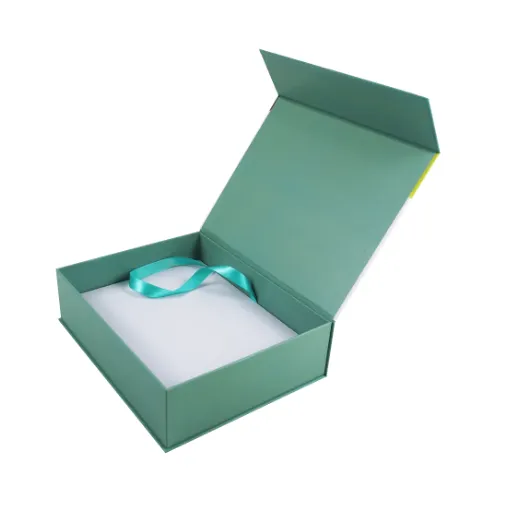
Rigid boxes with magnetic closure use embedded magnets to create a secure, repeatable snap-shut mechanism between the lid and base, combining structural protection with a tactile unboxing experience that signals premium quality. The best magnetic closure boxes match magnet type and pull force to product weight, use precise alignment tolerances, and are built with board strong enough to prevent lid warp over thousands of open-close cycles.
That snap is not decorative theater. It is calibrated engineering. A neodymium magnet pair pulling across a precise air gap, bonded to 1,500gsm greyboard with adhesive rated for ten thousand cycles. Most buyers choose magnetic closure for how it looks. Smart buyers choose it for how it works.
If you have ever opened a luxury skincare box and felt that satisfying click, you already understand the appeal. But getting that experience right requires more than picking a box style. You need to know magnet grades, pull-force physics, placement geometry, and the failure modes that turn a premium unboxing into a customer complaint.
This guide covers the engineering behind magnetic closure rigid boxes. You will learn how to specify the right magnet type for your product weight, what adding magnetic closure actually costs per unit, how to prevent the three most common failure modes, and what questions to ask your manufacturer before you commit to production.
Key Takeaways
- Match magnet pull force to product weight: ferrite for items under 200g, neodymium N35-N42 for 200g-1.5kg, and dual neodymium N48+ for anything heavier.
- Hidden magnetic closures cost 20-30% more than exposed closures but deliver the highest perceived luxury.
- Adding magnetic closure typically increases unit cost by 0.20−0.20−1.20 depending on magnet type and placement method.
- The three most common failures are lid warp, adhesive fatigue, and magnet demagnetization, all preventable with proper board weight and quality control.
- Magnetic closure boxes ship pre-assembled, which increases freight volume but protects alignment precision during transit.
What Is a Magnetic Closure Rigid Box?
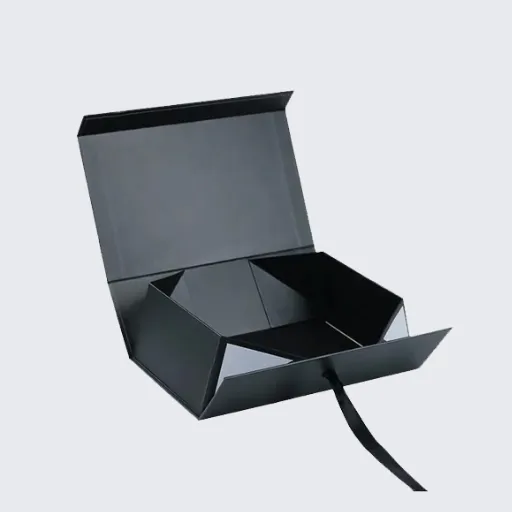
Rigid boxes with magnetic closure are setup boxes constructed from thick greyboard wrapped in printed paper or specialty material, with one or more pairs of permanent magnets embedded in the lid and base to create a secure, repeatable closure.
When the lid approaches the base, the magnets align and pull together with an audible snap. That sound is part of the design. It provides immediate tactile and auditory feedback that tells the customer, without words, that this product is worth protecting. The rigid board shell typically uses 1,200gsm to 2,000gsm chipboard, four to five times stronger than standard folding carton stock. This structural integrity is what lets the box maintain its shape and keep magnets aligned through repeated use.
The closure mechanism itself is deceptively simple. A magnet pair consists of a north-pole and south-pole disc or strip, positioned so they attract when the lid closes. The gap between them when closed, the pull force required to separate them, and the precision of their alignment all determine how the closure feels. Too weak, and the lid flops open. Too strong, and customers struggle to open the box. The sweet spot depends on product weight, lid size, and the experience you want to create.
Want to see how magnetic closure compares to other rigid box styles? Explore our complete guide to custom rigid box types to find the best structural match for your product.
Types of Magnetic Closure Mechanisms
Not all rigid boxes with magnetic closure use the same mechanism. The closure type you choose affects aesthetics, cost, manufacturing complexity, and the end-user experience. Here are the five configurations you need to know.
Hidden (Concealed) Magnetic Closure
In a hidden closure, the magnets sit inside pockets cut into the board layers and are completely invisible from the exterior. The wrap paper covers them entirely. When you open the box, you see only clean board and lining.
This is the most premium configuration. It costs more because it requires precise pocket die-cutting, careful hand or automated placement, and flawless wrap alignment to conceal the magnet bulk. But the result is worth it for luxury cosmetics, fine jewelry, and spirits packaging where every detail signals quality.
Exposed (Surface-Mounted) Magnetic Closure
Exposed closures mount magnets on the interior surface of the lid flap or the base edge, where they remain visible when the box is open. A small paper cover or matching material may hide them partially, but they are not buried inside the board.
This approach reduces manufacturing complexity and cost. It is the practical choice for mid-premium products, larger boxes where hidden placement would be prohibitively expensive, and applications where the interior is lined with foam or fabric that visually integrates the magnets anyway.
Strip Magnet Closure
Instead of discrete circular magnets, strip magnet closure uses a continuous magnetic strip running along the lid edge and a matching ferrous strip on the base. This distributes closing force evenly across the entire edge rather than concentrating it at one or two points.
Strip closures work best for wide boxes and book-style designs where a single magnet pair would leave the corners loose. The trade-off is slightly higher material cost and the need for precise strip alignment during assembly.
Snap Magnet (Single or Dual Point)
Single or dual snap configurations use one or two discrete magnet pairs positioned at specific points, typically centered on the front edge. This is the most common setup and works well for standard rectangular boxes up to about 30cm in length.
Dual-point setups add a second magnet pair near the sides for wider lids. They prevent the lid from lifting at the corners and are essential for boxes over 25cm wide or those holding products heavier than 500g.
Hinged Lid with Magnetic Catch
The hinged design attaches the lid to the base with a paper or fabric hinge along the back edge, while the front edge uses a magnetic catch to hold the box closed. This is the classic book-style presentation box.
Hinged magnetic boxes eliminate the risk of losing a separate lid and create a more dramatic reveal when opened. They are the go-to choice for corporate gift sets, subscription boxes, and any product where the opening choreography matters as much as the closure.
Magnet Engineering: What Buyers Need to Know
Rigid boxes with magnetic closure live or die on engineering details that most manufacturers never explain. Here is what actually matters when you specify magnets for packaging.
Magnet Types Used in Packaging
Packaging manufacturers use three main magnet types, and the choice directly affects performance, durability, and cost.
Neodymium (NdFeB) is the strongest permanent magnet material available. A pair of 10mm x 2mm neodymium discs delivers roughly 1.2 to 2.5 kilograms of pull force depending on grade. Neodymium is the standard for premium packaging where a crisp, confident snap is non-negotiable. The downside is higher cost and sensitivity to temperature. Neodymium loses strength above 80°C and can corrode without protective coating.
Ferrite (ceramic) magnets are weaker but cheaper and more temperature-stable. A comparable ferrite pair delivers 0.4 to 0.8 kilograms of pull force. Ferrite works for light products like jewelry and small cosmetics where an aggressive snap would feel excessive. It is also the more sustainable choice from a supply-chain perspective, since ferrite uses iron oxide rather than rare earth elements.
Samarium-cobalt sits between neodymium and ferrite in strength and offers the best temperature stability, but its cost makes it rare in consumer packaging. You might encounter it in pharmaceutical or industrial applications where sterilization or extreme conditions are factors.
Pull Force and Product Weight
The most common mistake buyers make is mismatching magnet strength to product weight. Here is a practical reference table based on typical packaging specifications.
| Product Weight | Recommended Pull Force | Magnet Type | Typical Use Case |
|---|---|---|---|
| Under 200g | 0.5-1.0 kgf | Ferrite or small neodymium | Jewelry, small cosmetics, samples |
| 200-500g | 1.0-2.0 kgf | Neodymium N35-N42 | Skincare sets, candles, fragrances |
| 500g-1.5kg | 2.0-3.5 kgf | Neodymium N42-N52 | Electronics, gift sets, multi-item kits |
| Over 1.5kg | 3.5-5.0 kgf + dual magnets | Neodymium N52 | Heavy products, wine bottles, tool kits |
Pull force is measured in kilogram-force (kgf), the force required to pull two magnet surfaces apart perpendicular to their contact plane. The values above assume a clean contact surface with no air gap. In practice, a thin paper wrap or laminate between magnet and mating surface reduces effective pull by 10-20%.
When Elena launched her organic skincare line in 2024, she specified the same magnet grade for her 30ml serum boxes and her 200ml gift sets. The serum boxes snapped shut beautifully. The gift sets, with heavier glass bottles inside, caused the lid to lift slightly at the corners. She had to ship a replacement batch with dual neodymium magnets. The lesson: product weight affects lid behavior even when the magnet seems strong enough on its own.
Magnet Placement Geometry
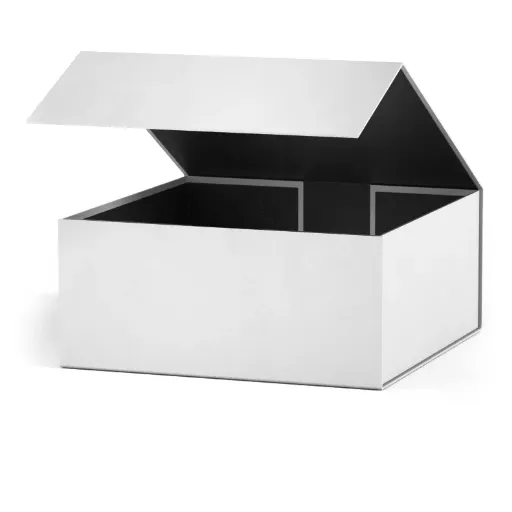
Magnet placement is a geometry problem. Position the magnets too close to the edge, and the board can fracture or the wrap can tear. Too far from the edge, and the mechanical use of the lid reduces effective closing force.
Standard practice places the magnet center 8 to 15 millimeters from the front edge of the lid, depending on board thickness. For a 1,500gsm board, 10mm is typical. For 2,000gsm or double-wall construction, 12-15mm provides enough material to absorb the stress.
Alignment tolerance between the lid magnet and base magnet should be within ±0.5 millimeters. Beyond that, the snap becomes weak or uneven. Precision jigs or automated placement machines are essential for consistent quality at scale.
For wide lids, a single centered magnet leaves the corners unsecured. The rule of thumb: add a second magnet pair for every 20cm of lid width beyond 15cm. A 30cm-wide box needs at least two pairs, ideally three.
Adhesive and Bonding Methods
The magnet is only as good as the adhesive holding it. Three bonding methods dominate packaging manufacturing.
Hot melt adhesive is the industry standard. It bonds quickly, costs little, and performs adequately for most consumer products. The risk is adhesive creep under temperature cycling. If boxes are stored in a hot warehouse then shipped through cold climates, the thermal expansion differential between magnet, adhesive, and board can loosen the bond over time.
Structural epoxy provides the highest durability. It forms a rigid, heat-resistant bond that resists creep and shock. It costs more and requires longer curing time, but for products that will be opened hundreds of times or shipped through extreme conditions, epoxy is the right choice.
Double-sided foam tape is useful for prototyping and short-run samples. It allows quick magnet repositioning during design development. It is not suitable for production volumes.
Ready to see how magnetic closure fits your product? Request a free pre-production sample with your specified magnet type, pull force, and placement. We ship samples worldwide with a 5-day turnaround.
Design and Customization Options
Magnetic closure is a canvas. The mechanism itself is only the foundation. What you do with the surfaces, interior, and structural form determines whether the box feels generic or unforgettable.
Exterior Finishes That Pair with Magnetic Closure
The snap of a magnetic closure creates a moment of tactile anticipation. The exterior finish should build up to that moment.
Soft-touch lamination pairs exceptionally well with magnetic closure. The contrast between the velvety exterior and the crisp mechanical snap creates a multi-sensory experience that customers remember. When the soft-touch surface gives way to the magnetic pull, the sequence reads as luxury.
Foil stamping on the closure flap turns the magnet location into a visual accent. A gold or silver foil line along the edge where the lid meets the base draws the eye to the exact point of closure. It makes the snap feel intentional rather than incidental.
Embossing or debossing around the magnet pocket area adds texture and shadow that hint at the mechanism beneath without revealing it. This works particularly well with hidden closures where you want to suggest precision engineering.
Interior Design and Inserts
The interior of a magnetic closure box should complement the opening experience, not fight it.
EVA foam cutouts with magnet relief pockets prevent the product from pressing against the magnet and weakening the closure over time. A well-designed foam insert holds the product securely while leaving the magnet pair free to engage fully.
Satin or velvet lining extending to the closure edge softens the transition between opening and closing. It also protects delicate products from abrasion against the board edge.
Ribbon pulls work with magnetic resistance rather than against it. A silk or grosgrain ribbon looped under the lid flap gives customers use to break the magnetic seal smoothly. Without a pull, a strong magnet can make opening feel like a struggle.
Shape and Structural Variations
Beyond the standard rectangular book-style box, magnetic closures adapt to several structural forms.
Two-piece with magnetic alignment uses magnets not just for closure but for positioning. The lid lifts off completely, but small magnet pairs at the corners guide it back into perfect alignment. This is useful for display packaging where customers need full lid removal.
Collapsible magnetic boxes ship flat and assemble on receipt, with magnets pre-installed in the folded structure. They reduce freight volume by 60-70% compared to assembled boxes, making them ideal for e-commerce brands that need premium presentation without premium shipping costs.
Shoulder-neck with magnetic top combines the elegant reveal of a shoulder-neck rigid box with the convenience of magnetic closure on the top lid. The inner shoulder holds the product while the outer lid snaps shut magnetically.
Cost Mechanics: What Magnetic Closure Adds to Your Unit Price
Adding magnets to rigid boxes with magnetic closure is not free, but it is also not mysterious. Here is how the cost breaks down.
Magnet Cost Component
| Magnet Specification | Cost Per Pair (USD) | Notes |
|---|---|---|
| Ferrite disc, 10mm x 2mm | 0.02−0.02−0.05 | Adequate for light products under 200g |
| Neodymium N35, 10mm x 2mm | 0.08−0.08−0.15 | Standard premium choice |
| Neodymium N42, 15mm x 3mm | 0.20−0.20−0.35 | Heavy products, dual-magnet setups |
| Magnetic strip, per linear cm | 0.03−0.03−0.08 | Even force distribution for wide lids |
Prices vary with order volume, magnet grade, coating type (nickel vs. zinc vs. epoxy), and market conditions for rare earth materials. Neodymium prices fluctuate with global supply chains. Ferrite is more stable.
Labor and Assembly Cost
| Placement Method | Cost Adder Per Box | Notes |
|---|---|---|
| Hand placement | 0.15−0.15−0.30 | Lower setup cost, higher unit cost |
| Semi-automated placement | 0.05−0.05−0.12 | Best for runs above 1,000 units |
| Pocket die-cutting | 0.03−0.03−0.08 | One-time die cost plus per-unit cutting |
Hand placement is standard for orders under 500 units. Semi-automated machines use vacuum pick-and-place heads to position magnets with ±0.3mm accuracy. They require setup and calibration but pay for themselves on runs above 1,000 units.
Total Cost Impact
Adding magnetic closure to a standard rigid box typically increases the unit price by:
- Single-point ferrite closure: 0.20−0.20−0.50 per unit
- Dual-point neodymium closure: 0.60−0.60−1.20 per unit
- Strip magnet closure: 0.40−0.40−0.90 per unit
This represents roughly a 15-30% increase over the base rigid box cost for standard sizes. For context, a 3.00rigidboxbecomes3.00rigidboxbecomes3.50-3.90withapremiumhiddenneodymiumclosure.A3.90withapremiumhiddenneodymiumclosure.A6.00 luxury box becomes 7.00−7.00−7.80 with dual magnets and foam insert.
The real question is not whether you can afford the adder. It is whether the improved perceived value, unboxing shareability, and customer retention justify the investment. For products priced above $50 retail, magnetic closure almost always pays for itself through reduced returns and increased word-of-mouth.
Industries and Applications
Magnetic closure rigid boxes work across virtually every premium product category. The key is matching the closure specification to the product’s weight, fragility, and brand positioning.
Cosmetics and Skincare
Beauty brands use magnetic closure boxes for serums, palettes, fragrance sets, and gift collections. The mechanism creates a ritual around daily use. Customers reach for the box, feel the snap, and unconsciously associate the brand with quality.
Common specification for cosmetics: single hidden neodymium magnet, 1.0-1.5 kgf pull force, soft-touch lamination exterior, satin lining interior. For fragrance sets with multiple heavy glass bottles, upgrade to dual magnets and custom EVA foam.
Jewelry and Watches
Jewelry demands precision. The box should feel as carefully made as the piece inside. Magnetic closures for rings and necklaces typically use small ferrite or compact neodymium magnets hidden in velvet-lined lids.
Watch boxes present a unique challenge. A single watch in a cushion can weigh 200-400g with the cushion, but the lid must still close securely when the box is carried. Dual small neodymium magnets at the front corners solve this without adding bulk.
Electronics and Tech Accessories
Headphones, smartwatches, cables, and portable chargers need protection during shipping and a premium reveal at unboxing. Electronics magnetic boxes are typically larger and heavier, requiring stronger closures.
Common specification: dual neodymium N42, 2.0-3.0 kgf, exposed or hidden depending on price point, with molded pulp or EVA foam insert shaped to the product.
Corporate Gifting and Subscription Boxes
When a PR agency sends a product launch kit to 500 journalists, the box is part of the message. Hinged book-style magnetic boxes with ribbon pulls and branded foil stamping create unboxing moments that end up on Instagram and LinkedIn.
Subscription boxes benefit from magnetic closure because the box itself becomes part of the monthly experience. Customers keep and reuse magnetic boxes at rates three to five times higher than standard folding cartons, turning every shipment into a long-term brand impression.
Marcus runs a quarterly subscription box for artisanal coffee equipment. He switched from tuck-end mailers to collapsible magnetic rigid boxes in 2025. Freight costs increased, but customer retention jumped 18% and social media mentions of his packaging outnumbered mentions of the products inside. The box had become the story.
Sustainability and End-of-Life Considerations
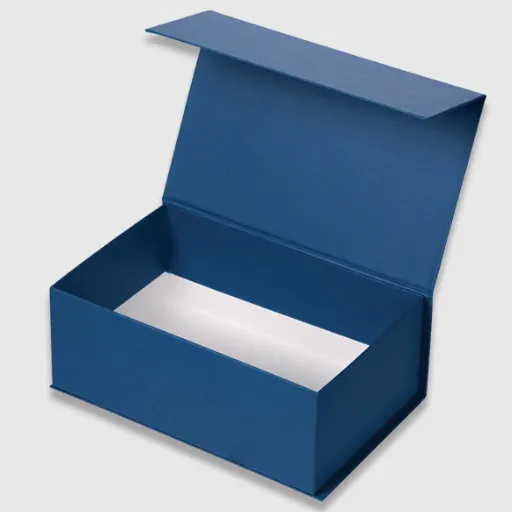
Magnetic closure boxes present a genuine sustainability trade-off. The magnets that make the closure satisfying also complicate recycling.
The Magnet Recycling Challenge
Neodymium and ferrite magnets are not recyclable through standard paper and cardboard streams. A magnetic closure box is technically a mixed-material product: paperboard, adhesive, metal magnets, and possibly plastic laminate or foam insert. In most municipal recycling systems, mixed-material packaging is either landfilled or incinerated.
This is not a reason to avoid magnetic closure. It is a reason to design for disassembly.
Design Strategies for Lower Environmental Impact
Easy magnet removal is the most practical approach. Using a peel-off adhesive design, consumers can remove the magnets with gentle pressure and recycle the paperboard separately. The magnets themselves can be collected and sent to specialized rare earth recyclers.
Mono-material alternatives exist. Paper-based magnetic materials, while weaker than neodymium, are fully recyclable and adequate for light products under 150g. They cost more per unit but eliminate the mixed-material problem entirely.
FSC-certified board with soy-based inks and water-based coatings offsets some of the environmental impact. When the paper components are sustainably sourced, the overall footprint of a magnetic box can still be lower than a non-recyclable plastic clamshell or blister pack.
Design for reuse is arguably the most impactful strategy. A magnetic closure box that a customer keeps for five years as a storage container displaces the need for a separate purchase. The environmental cost of manufacturing is amortized across a much longer lifespan.
At Fuzhou Longlu, we offer FSC-certified greyboard, water-based adhesives for magnet bonding, and recyclable wrap papers for all magnetic closure orders. We also provide design guidance for magnet placement that facilitates end-of-life disassembly.
Common Failure Modes and How to Prevent Them
Even well-specified magnetic closure boxes can fail if manufacturing tolerances drift or material choices are wrong. Here are the three failures we see most often and how to avoid them.
Lid Warp and Closure Gap
Warp happens when the greyboard absorbs humidity and expands unevenly. The lid no longer sits flat, creating a visible gap where the magnets cannot fully engage.
Prevention is straightforward. Use board rated at 1,500gsm or higher. Store materials in climate-controlled conditions before assembly. Run board grain direction parallel to the hinge edge so any expansion happens symmetrically. For high-humidity markets like Southeast Asia, specify moisture-resistant board or add a protective laminate to the interior.
Magnet Demagnetization
Neodymium magnets lose strength when exposed to temperatures above 80°C, strong opposing magnetic fields, or physical shock. A box left in a hot delivery van or dropped repeatedly during handling can see magnet strength drop 20-40%.
Specify nickel-copper-nickel coated neodymium magnets. The coating protects against corrosion and minor impact. For products shipping through extreme climates, use ferrite magnets instead. They are less powerful but far more stable.
Adhesive Fatigue and Magnet Dislodgement
The magnet detaches from the board pocket, usually because the adhesive bond has weakened through repeated opening cycles or temperature fluctuation.
The fix is adequate glue surface area and the right adhesive chemistry. A magnet with 10mm diameter needs at least 8mm of bonded surface on all sides of its pocket. For products expected to endure heavy use, specify epoxy bonding rather than hot melt. Quality control should include periodic pull-testing of assembled closures to catch weak bonds before shipment.
How to Choose the Right Magnetic Closure for Your Product
Use this decision matrix to match your priorities to the right specification.
| Your Priority | Recommended Closure Type | Magnet Spec | Budget Impact |
|---|---|---|---|
| Maximum luxury feel | Hidden neodymium, single point | N42, 1.5 kgf | Medium-High |
| Tight budget | Exposed ferrite, single point | Ferrite, 0.8 kgf | Low |
| Heavy product / large lid | Hidden neodymium, dual point | N48, 2.5-3.5 kgf | High |
| Eco-focus | Exposed ferrite or paper magnet | Low strength | Low |
| E-commerce / shipping | Collapsible, dual neodymium | N42, 2.0 kgf | Medium |
| Subscription / repeat open | Hidden neodymium + quality adhesive | N42, 1.2 kgf | Medium |
Start with your product weight. That determines magnet type and pull force. Then consider your brand tier. Luxury brands almost always choose hidden closures. Value-premium brands can achieve excellent results with exposed closures and good finishing. Finally, factor in logistics. E-commerce brands should consider collapsible designs to control shipping costs.
Sourcing Magnetic Closure Rigid Boxes: What to Ask Your Manufacturer
Before you place an order, ask these questions. The answers separate capable manufacturers from ones who will cost you money in rework and returns.
Do you offer pre-production samples with actual magnet placement? A sample with real magnets, not placeholders, lets you test pull force and alignment before committing to a full run.
What magnet types and grades do you stock? A manufacturer who only stocks one magnet type cannot optimize for your product. Look for suppliers with access to neodymium N35-N52, ferrite, and strip magnet options.
What is your alignment tolerance for magnet pairs? ±0.5mm is the standard. Anything looser will produce weak or uneven closures at volume.
Do you pull-test closures as part of quality control? Random sampling with a force gauge verifies that every box meets specification.
What board weights do you recommend for my product dimensions? The answer should include a specific GSM recommendation and grain direction guidance.
Can you provide FSC-certified materials with magnetic closure? Sustainability certifications should not be limited to standard boxes.
What is your MOQ for custom magnetic closure boxes? Low minimums matter for product launches and limited editions. At Fuzhou Longlu, our MOQ starts at 100 units for standard sizes.
How do you ship, assembled or flat? Magnetic closure boxes typically ship assembled because pre-installed magnets make flat folding impractical. Confirm freight implications before ordering.
Need a manufacturer who can answer all of these questions with confidence? Contact Fuzhou Longlu Packaging for a free consultation, sample, and quote. We specialize in low-MOQ custom magnetic closure rigid boxes with 5-day sample turnaround and global shipping.
Conclusion
Rigid boxes with magnetic closure represent a convergence of tactile psychology and mechanical engineering. The snap that delights your customer is the result of magnet grade, pull-force calibration, placement precision, and adhesive chemistry working together.
Get it right, and the box becomes part of your brand story. Customers remember the moment of opening. They share it. They keep the box and see your brand every time they open their drawer.
Get it wrong, and you are left with lids that flop, magnets that fail, and packaging that undermines the product inside.
The four principles to remember: match magnet strength to product weight, choose hidden or exposed based on your brand tier, budget 15-30% for the magnetic closure adder, and design for the full lifecycle including potential failure modes.
If you are ready to specify rigid boxes with magnetic closure for your next product launch, start with a sample. Test the snap. Feel the alignment. See how the finish complements your branding. A good sample answers questions that no article can.
FAQs
What is the minimum order quantity for magnetic closure rigid boxes?
Minimum order quantities vary by manufacturer. At Fuzhou Longlu, we produce custom magnetic closure rigid boxes starting at 100 units for standard sizes. Higher volumes unlock lower per-unit pricing, but our low MOQ is designed to support product launches and limited editions.
How much does adding magnetic closure increase the cost per box?
Adding magnetic closure typically increases unit cost by 0.20to0.20to1.20 depending on magnet type, placement method, and order volume. A single-point ferrite closure adds roughly 0.20−0.20−0.50 per unit. A dual-point hidden neodymium closure adds 0.60−0.60−1.20. This represents a 15-30% increase over the base rigid box price.
Can magnetic closure boxes be recycled?
Standard magnetic closure boxes are mixed-material products and cannot be recycled through most municipal paper streams because the magnets must be separated first. However, you can design for recyclability by using peel-off magnet adhesives that let consumers remove magnets before recycling the board. FSC-certified board and soy-based inks further reduce environmental impact.
What is the difference between hidden and exposed magnetic closures?
Hidden magnetic closures embed magnets inside the board layers, completely concealed from view. They cost more but deliver the highest perceived luxury. Exposed magnetic closures mount magnets on the interior surface where they remain visible when open. They are less expensive and faster to manufacture, making them ideal for mid-premium applications.
How do I know what magnet strength my product needs?
Match pull force to product weight. Items under 200g need 0.5-1.0 kgf. Products between 200g and 500g need 1.0-2.0 kgf. Heavier items up to 1.5kg need 2.0-3.5 kgf. Anything over 1.5kg requires dual magnets with 3.5-5.0 kgf combined pull force. Remember that a heavier product exerts more use on the lid, so err on the stronger side for gift sets and multi-item boxes.
Do magnetic closure boxes ship flat or pre-assembled?
Most magnetic closure boxes ship pre-assembled because the magnets are installed during construction and the rigid board does not fold flat without compromising alignment. Collapsible magnetic box designs are an exception. They ship flat and assemble on receipt with magnets pre-installed in the folded structure, reducing freight volume by 60-70%.
What causes a magnetic closure to stop working?
The three most common causes are lid warp from humidity absorption, adhesive fatigue from temperature cycling or repeated use, and magnet demagnetization from heat exposure or physical shock. All three are preventable with proper board weight, climate-controlled storage, epoxy bonding for high-use products, and nickel-coated neodymium magnets.
Are there any shipping restrictions for boxes with magnets?
Neodymium magnets can trigger customs inspections or air freight restrictions if their magnetic field strength exceeds IATA guidelines. For international shipping, manufacturers typically ship magnetic closure boxes with magnets oriented in opposing pairs, which cancels the external field and satisfies most shipping requirements. Always confirm with your freight forwarder for specific routes.