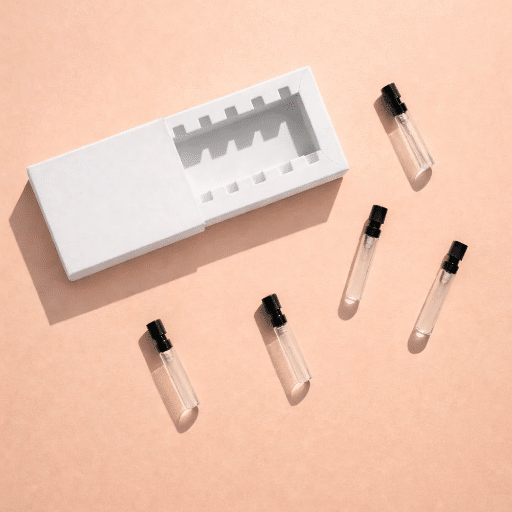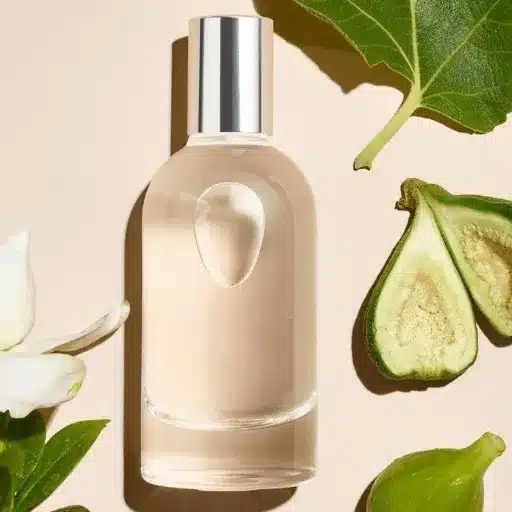
The best eco-friendly perfume packaging combines recycled glass bottles, refillable systems, biodegradable secondary packaging, and mono-material designs that eliminate mixed-component waste. Brands like Chanel, Diptyque, and Lush have proven that sustainability and luxury can coexist, and consumers are rewarding them for it.
In 2026, the fragrance industry faces a paradox. Your customers want packaging that feels premium in their hands. At the same time, 73% of them are willing to pay more for products that don’t harm the planet. The question isn’t whether to go green anymore. It’s how to do it without sacrificing the unboxing experience that sells your brand.
This guide covers everything you need to make that shift. You’ll learn which sustainable materials deliver both luxury feel and environmental impact, how leading brands are designing refillable and recyclable systems, what certifications actually matter, and how to source eco-friendly perfume packaging at scale, including realistic cost expectations and lead times.
Key Takeaways
- 48% of new luxury fragrance prototypes now use recycled or recyclable materials, up from 27% in 2020.
- Refillable perfume bottles can reduce packaging waste by up to 70% while building long-term customer loyalty.
- The eco-friendly cosmetic packaging market will reach $5.78 billion in 2026, growing at 9.1% annually.
- 83% of Gen Z fragrance buyers rank sustainability as a top purchase criterion.
- Working with an integrated manufacturer can cut costs by 15-25% compared to sourcing bottles, caps, and boxes separately.
What Is Eco-Friendly Perfume Packaging?
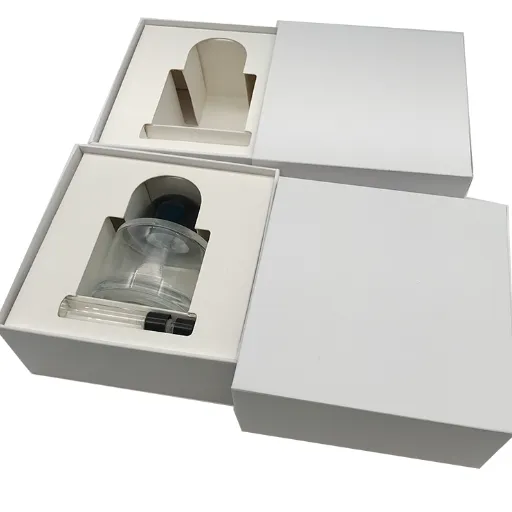
Eco-friendly perfume packaging minimizes environmental impact across its entire lifecycle. It follows four simple principles: reduce material use, reuse containers, recycle components, and regenerate with materials that return safely to nature.
Traditional perfume packaging has historically prioritized looks over sustainability. Think heavy glass bottles in rigid boxes, wrapped in cellophane, tucked into velvet pouches. Each layer uses different materials. Glass, coated paperboard, plastic film, fabric, and ink are nearly impossible to separate for recycling.
The shift to eco-friendly perfume packaging flips that model. It starts with designing for the end from the very beginning. Will this bottle be refilled? Can every component go into the same recycling bin? Does the outer box need to exist at all? These questions now drive innovation across the fragrance industry.
At Fuzhou Longlu Packaging Co., Ltd., we approach this through one-stop green production, handling everything from glass bottle treatment to custom box manufacturing under one roof. That integration doesn’t just reduce logistics emissions. It also gives brands tighter control over material consistency and certification compliance.
Why Sustainable Perfume Packaging Matters Now More Than Ever
Consumer Demand Is Driving the Shift
The data is unambiguous. According to NielsenIQ research, 73% of global consumers say they would change their consumption habits to reduce environmental impact. For fragrance specifically, that willingness translates directly into purchasing behavior. A 2025 industry survey found that 54% of consumers are willing to pay an 8-12% premium for perfume packaged in recycled or renewable materials.
The generational divide is even more striking. 83% of Gen Z fragrance users rank sustainability as a top-three purchase criterion. This isn’t a niche concern. It’s the mainstream expectation of the fastest-growing consumer demographic in beauty.
Maria Chen, founder of a niche fragrance startup in Los Angeles, learned this the hard way. She launched her first perfume in early 2024 with conventional packaging. A standard glass bottle sat in a laminated rigid box with a plastic window. Sales were steady but flat.
Six months later, she switched to a refillable glass bottle with an FSC-certified paper box and a wooden cap. Her online conversion rate jumped 23%. Customer reviews repeatedly mentioned the “beautiful sustainable packaging” as a reason for purchase. The packaging change paid for itself in under four months.
Regulatory Pressure Is Closing In
Governments aren’t waiting for voluntary brand commitments. The European Union’s Packaging and Packaging Waste Directive mandates 65% packaging waste recycling by 2025. New rules under the EU Circular Economy Action Plan will tighten targets further. Extended Producer Responsibility schemes now make brands financially accountable for their packaging’s end-of-life impact.
In the United States, California’s SB54 requires all packaging sold in the state to be recyclable or compostable by 2032. Other states are following with similar legislation. For fragrance brands selling globally, compliance isn’t optional. Retro-fitting packaging to meet regulations costs far more than designing sustainably from the start.
Even luxury conglomerates are moving aggressively. LVMH’s “LV Pack in Green” initiative targets 100% sustainable group packaging by 2026. Kering, Estee Lauder, and Coty have made similar public commitments. When the biggest players in luxury set the pace, the supply chain adapts. Smaller brands that don’t keep up risk looking outdated.
The Business Case Is Strong
Sustainable fragrance products are growing 2.7 times faster than conventional alternatives. The eco-friendly cosmetic packaging market, which includes perfume, is projected to reach $5.78 billion in 2026 with a compound annual growth rate of 9.1%.
From a sourcing perspective, sustainable materials have also become more accessible. Post-consumer recycled (PCR) glass is now widely available from major manufacturers. Biodegradable molded pulp now achieves finishes smooth enough for luxury gift boxes. The cost gap between conventional and sustainable options has narrowed to roughly 15-25%. Consumers are demonstrably willing to absorb that premium.
Top Sustainable Materials for Perfume Packaging
Choosing the right material depends on which part of your packaging system you’re designing, the bottle, the cap, the pump, the box, or the protective inserts. Here’s how the leading sustainable options compare.
Recycled and Lightweight Glass
Glass remains the dominant material for premium perfume bottles, and for good reason. It’s chemically inert, preserves fragrance integrity, and conveys luxury through weight and clarity. But not all glass is equal from a sustainability standpoint.
Post-consumer recycled (PCR) glass uses cullet, crushed glass from recycled bottles, as a raw material input. Modern manufacturers like Verescence and Gerresheimer now achieve up to 85% PCR content while maintaining the clarity luxury brands demand. Using PCR glass reduces energy consumption by roughly 30%. Melting cullet simply requires lower temperatures than virgin glass.
Lightweighting is another powerful lever. Reducing wall thickness by just 10-15% cuts material use and shipping weight. Structural integrity stays intact. The challenge is psychological. Research shows that 68% of luxury buyers unconsciously associate heavier weight with higher quality. Smart brands counter this in three ways. They use textured surfaces. They add thicker bases that concentrate weight where it’s felt. They design innovative shapes that feel substantial without excess material.
Bio-Based Plastics
Bio-based plastics come from renewable plant sources rather than fossil fuels. The most common types in fragrance packaging include:
- PLA (polylactic acid) from cornstarch or sugarcane, suitable for caps and decorative elements
- Bio-PET from sugarcane ethanol, used for bottles and pump components
- PHA from microbial fermentation, fully marine biodegradable
Guerlain, part of LVMH, pioneered bio-based Surlyn polymers for fragrance caps. These materials deliver the same glossy finish as conventional plastic. They reduce carbon footprint by up to 40%.
The limitation? Bio-based plastics still need industrial composting facilities. They won’t break down in a home compost bin or landfill. Brands marketing biodegradability should communicate this distinction clearly.
Mushroom Mycelium and Molded Pulp
For protective packaging and gift box inserts, mushroom mycelium and molded pulp represent the cutting edge of sustainable innovation.
Mycelium packaging is grown, not manufactured. Agricultural waste like hemp hurds gets inoculated with mushroom spores. The spores bind fibers into a solid, foam-like material. The result provides excellent cushioning. It fully decomposes in soil within 45 days. Lush uses mycelium for gift sets. The material is gaining traction across the luxury sector.
Molded pulp from bamboo, sugarcane bagasse, or recycled paper offers a more established alternative. It’s cost-effective, widely available, and can be produced in colors ranging from natural kraft to deep black. For perfume brands, molded pulp works beautifully as tray inserts that cradle the bottle while eliminating the need for plastic film or foam.
FSC-Certified Wood and Bamboo
Wooden and bamboo caps are one of the fastest-growing segments in sustainable fragrance packaging. They deliver a tactile, organic warmth that plastic simply cannot replicate, and they signal environmental commitment before a customer even reads your label.
Beech, ash, and walnut are the most common choices for perfume caps. Bamboo, which grows up to 91 cm per day, offers an even more renewable option. Both materials can be engraved, lacquered, or left raw depending on brand aesthetic.
The key consideration is certification. FSC (Forest Stewardship Council) certification ensures that wood comes from responsibly managed forests that protect biodiversity and respect indigenous rights. Any brand claiming sustainability should insist on FSC-certified wood for their packaging.
Recycled Aluminum
Aluminum is infinitely recyclable without quality loss, a property that makes it exceptionally valuable in circular packaging systems. It’s lightweight, durable, and works well for solid perfume tins, travel sprays, and cap accents.
Byredo and several niche fragrance brands have adopted aluminum components as part of their sustainability strategies. The material pairs especially well with minimalist, industrial design aesthetics.
Kraft Paper and Biodegradable Cardboard
For secondary packaging, the box that holds your bottle, kraft paper and uncoated cardboard have become the standard for eco-conscious brands. These materials are:
- Fully recyclable in standard paper streams
- Compatible with soy-based and vegetable inks
- Strong enough for structural rigid boxes when layered
- Naturally textured, giving an organic, artisanal feel
At Fuzhou Longlu, we produce custom perfume boxes using FSC-certified kraft and recycled cardboard with soy-based inks and water-based coatings. The result is secondary packaging that protects your product, reinforces your brand values, and leaves no trace in landfills.
Innovative Eco-Friendly Packaging Designs
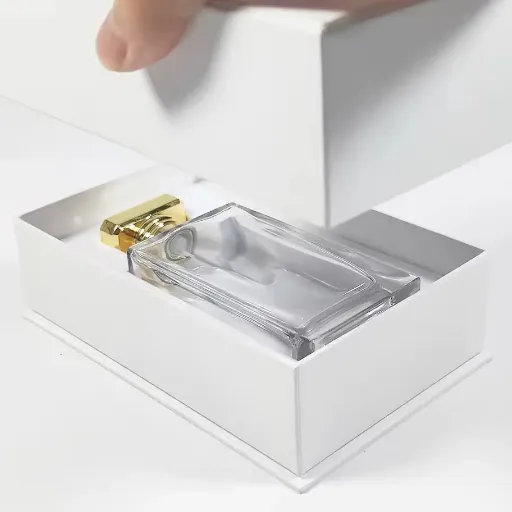
Material choice is only half the equation. How you structure your packaging system determines whether those materials actually stay out of landfills.
Refillable and Modular Systems
Refillable perfume packaging has moved from niche eco-feature to structural standard in luxury fragrance. The concept is simple: customers buy a high-quality, designed-to-last bottle once, then purchase refill cartridges or visit in-store refill stations.
The environmental impact is dramatic. A 2025 lifecycle analysis found that refillable perfume bottles reduce packaging waste by up to 70% over five years compared to single-use alternatives. The business impact is equally compelling. Refill customers have 2.3x higher lifetime value than single-purchase customers, according to data from brands with established refill programs.
Leading implementations include:
- Chanel’s “Les Eaux de Chanel”, Recycled glass bottles designed for in-boutique refilling
- Diptyque, Refill pouches that customers pour into their existing bottles
- Le Labo, In-store fresh-blending and refilling as a core brand experience
- Maison Francis Kurkdjian, Modular bottle systems with interchangeable caps
For brands considering refillable packaging, the design challenge is sealing. A refillable bottle must open and close hundreds of times without leaking, evaporating fragrance, or degrading the spray mechanism. This requires precision engineering in the threading, gasket materials, and pump assembly.
Design for Disassembly
Traditional perfume bottles combine glass, metal, plastic, and adhesive. That mix makes recycling practically impossible. The metal spring inside a spray pump can’t separate from the plastic housing at standard recycling facilities. Decorative coatings contaminate glass cullet streams.
Design for disassembly solves this. Every component becomes separable without tools. Key principles include:
- Simpler pump assemblies with fewer glued joints
- Standardized neck finishes (15mm or 18mm) that work across cap types
- Screw-on rather than crimped pump attachments
- Removable decorative sleeves and labels before recycling
- Mono-material caps instead of mixed compositions
Some brands add QR codes to packaging. These link to short videos showing exactly how to disassemble the bottle for recycling. It’s a small touch. It dramatically improves actual recycling rates.
Minimalist and Plastic-Free Luxury
The most sustainable packaging is packaging that doesn’t exist. A growing number of fragrance brands are eliminating secondary packaging entirely, selling the bottle alone, wrapped in recycled tissue paper or a simple paper band.
When boxes are necessary, plastic-free luxury proves that sustainability doesn’t mean compromise. Techniques include:
- Glue-free origami engineering, rigid boxes built with interlocking tabs and mechanical friction
- Water-based coatings, solvent-free finishes that protect print quality without toxic chemicals
- Vegetable-based inks, Hermès has committed to these for all fragrance packaging
- Uncoated, textured paper, natural feel that conveys authenticity and craftsmanship
These approaches work because they align with a broader cultural shift. Consumers increasingly associate minimalism with confidence. A brand that doesn’t need elaborate packaging to prove its worth signals strength.
Smart and Connected Packaging
Sustainability isn’t just about materials, it’s also about transparency. Smart packaging technologies help brands prove their environmental claims and guide consumers toward proper disposal.
- NFC-enabled labels let customers tap their phone to verify authenticity and see the product’s sustainability credentials
- QR codes link to recycling instructions, refill location finders, and ingredient transparency pages
- Blockchain traceability is being adopted by luxury brands to document supply chain sustainability from raw material to finished product
Deloitte predicts 12% annual growth for connected packaging in the beauty sector through 2028. For perfume brands, this technology transforms packaging from a passive container into an active communication channel.
Challenges and Real Solutions in Sustainable Perfume Packaging
Switching to eco-friendly perfume packaging isn’t without hurdles. Understanding them upfront helps you plan realistic budgets and timelines.
The Luxury Perception Gap
The biggest barrier is psychological. 68% of luxury buyers equate heaviness with premium value. Lightweight glass can feel insubstantial. That creates real tension for sustainable design.
Solution: Concentrate weight where it’s felt. A thick glass base feels premium. The walls can stay thin and light. Textured surfaces add perceived value without adding material. Smart brands reframe the narrative. “Lightweight” becomes “precision-engineered.” “Reduced” becomes “intentional.”
Recycling Complexity
Most perfume bottles aren’t recyclable in practice. The mix of glass, metal springs, plastic pumps, and adhesive labels baffles municipal facilities. They simply can’t process mixed-material products.
Solution: Design for disassembly from day one. Use mono-material caps. Choose pumps with snap-fit rather than crimped attachments. Avoid metallic coatings on glass. Educate consumers too. A simple icon system showing how to separate components improves end-of-life outcomes dramatically.
Cost Premiums
Sustainable materials typically cost 15-30% more than conventional options. PCR glass costs more than virgin glass. Molded pulp tooling needs upfront investment. Wooden caps take longer to produce.
Solution: Offset costs through integration. Working with one manufacturer for bottles, caps, and boxes cuts shipping, reduces overhead, and unlocks volume discounts. At Fuzhou Longlu, our one-stop model delivers 15-25% total cost savings versus sourcing separately. Those savings absorb most of the sustainable material premium.
Consumer Convenience
Refillable systems require behavior change. Not all consumers welcome it. Roughly 70% of US consumers find manual refilling somewhat or very cumbersome.
Solution: Make refilling effortless. Use wide-mouth bottle openings. Offer pre-measured cartridges that click into place. Provide in-store refill stations. Build subscription models that deliver refills automatically. The easier the process, the higher your adoption rate.
How to Choose the Right Eco-Friendly Perfume Packaging
With so many materials, designs, and certifications to consider, selecting the right sustainable packaging can feel overwhelming. Here’s a practical framework.
Step 1: Define Your Sustainability Priorities
Not every brand needs to pursue every form of sustainability. Ask yourself:
- Is your primary goal waste reduction? Focus on refillable systems and lightweight materials.
- Is it circular recyclability? Prioritize mono-material designs and design for disassembly.
- Is it carbon footprint? Look at local sourcing, lightweighting, and renewable energy in manufacturing.
- Is it brand differentiation? Invest in visible innovations like wooden caps, seed paper, or mycelium inserts.
Step 2: Match Materials to Your Positioning
| If Your Brand Is… | Consider These Materials |
|---|---|
| Ultra-luxury ($200+) | Heavy PCR glass, solid metal or wood caps, minimal outer packaging |
| Premium ($80-200) | Lightweight PCR glass, bio-based plastic caps, FSC-certified rigid boxes |
| Clean/Natural ($50-100) | Lightweight glass, bamboo caps, kraft paper boxes, molded pulp inserts |
| Niche/Indie ($40-80) | Refillable systems, aluminum tins, uncoated paper, seed paper labels |
Step 3: Verify Certifications That Matter
Certifications provide third-party validation of sustainability claims. The most relevant ones for perfume packaging include:
- FSC — For paper, cardboard, and wood products
- Cradle to Cradle Certified — Evaluates material safety and recyclability
- EcoCert — Verifies natural and organic content in bio-based materials
- ISO 14001 — Environmental management system for your manufacturer
- B Corp — Holistic social and environmental performance certification
Be specific about certifications before approaching manufacturers. Not all suppliers hold all certifications. Requesting them mid-process can add weeks to your timeline.
Step 4: Ask Manufacturers the Right Questions
When evaluating a packaging partner, go beyond “do you offer eco-friendly options?” Ask:
- What percentage of your energy comes from renewable sources?
- Can you provide material traceability documentation?
- What is your actual PCR content capability for glass, not your theoretical maximum?
- Do you hold FSC chain-of-custody certification?
- What is your scrap and waste recycling rate in production?
- Can you produce samples using the exact sustainable materials for my final production run?
Step 5: Plan for Realistic Lead Times and MOQs
Sustainable materials sometimes require longer lead times than conventional alternatives. PCR glass may have supply variability. Wooden caps require curing time. Molded pulp tooling takes 2-3 weeks to produce.
Typical timelines for custom eco-friendly perfume packaging:
| Component | Standard Lead Time | Sustainable Material Lead Time | Typical MOQ |
|---|---|---|---|
| Glass bottles | 4-6 weeks | 5-7 weeks (PCR) | 3,000-5,000 units |
| Wooden caps | 3-4 weeks | 4-5 weeks (curing required) | 1,000-3,000 units |
| Rigid boxes | 2-3 weeks | 2-3 weeks (FSC paper) | 1,000-2,000 units |
| Molded pulp inserts | 2-3 weeks | 2-3 weeks | 2,000-5,000 units |
Working with an integrated manufacturer that handles multiple components under one roof can compress these timelines by eliminating inter-supplier coordination delays.
Ready to explore sustainable packaging for your fragrance brand? Contact our team for a free consultation and custom quote. We’ll walk you through material options, certification requirements, and realistic timelines for your specific project.
Real-World Examples: Brands Leading the Way
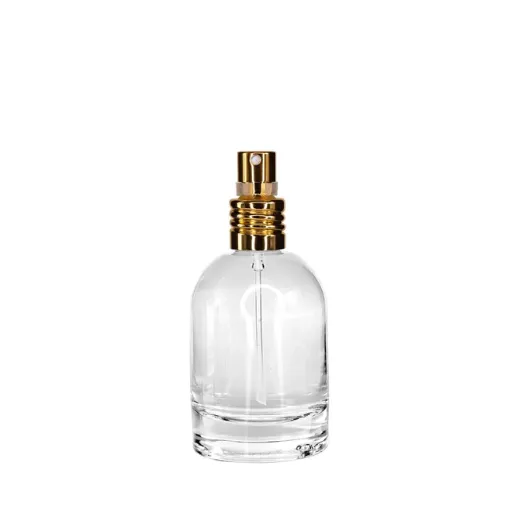
Chanel: Recycled Glass Meets Minimalist Design
Chanel’s “Les Eaux de Chanel” collection demonstrates that sustainability can enhance rather than dilute luxury. The bottles use recycled glass with a streamlined, lightweight design that feels intentional rather than cheap. The outer packaging is radically simplified, no box, no cellophane, just a recyclable paper sleeve. The message is clear: Chanel doesn’t need excess to prove its worth.
Diptyque: Refill Pouches That Keep Customers Coming Back
Diptyque’s refill program lets customers purchase fragrance in aluminum pouches and pour them into their existing glass bottles. The pouches use 85% less material than a full bottle and ship flat, reducing transport emissions. It’s a practical system that builds repeat purchase behavior while dramatically cutting per-use packaging waste.
Lush: Mushroom Packaging and Zero-Waste Innovation
Lush has pushed boundaries with mushroom mycelium packaging for gift sets and aluminum tins for solid perfumes that need no liquid packaging at all. Their approach isn’t about incremental improvement, it’s about rethinking whether traditional packaging formats are even necessary. For indie fragrance brands, Lush proves that radical sustainability can be a core brand differentiator.
Abel: Biodegradable Caps That Return to Soil
Natural perfume house Abel uses Vivomer caps, a bio-based material developed by Shellworks that biodegrades in soil within 20 weeks. The caps look and feel like conventional plastic but break down into organic matter without industrial composting. It’s a breakthrough that solves the end-of-life problem for a component that’s traditionally unrecyclable.
L’Occitane: 100% Recycled Glass at Scale
L’Occitane has committed to 100% recycled glass for its fragrance bottles, achieved through partnerships with specialized glass manufacturers. Unlike niche brands that can absorb higher per-unit costs, L’Occitane operates at volume, proving that recycled glass is viable even for mass-market production.
The Future of Eco-Friendly Perfume Packaging
Looking ahead to 2030, several trends will reshape what’s possible in sustainable fragrance packaging.
Carbon-negative materials are emerging from companies like Origin Materials and Newlight Technologies. These materials actually remove more CO2 from the atmosphere than their production releases. While still early-stage for perfume applications, they represent the next frontier beyond carbon-neutral.
Advanced recycling technologies like chemical recycling will make it possible to recycle mixed-material packaging that can’t be handled by mechanical recycling today. This could eventually solve the multi-material perfume bottle problem without requiring design changes.
Regulatory harmonization across the EU, US, and Asia-Pacific will create unified sustainability standards. Brands that invest early in comprehensive sustainable packaging will be positioned for compliance without last-minute scrambling.
Industry projections suggest that 70% of premium fragrances will incorporate biodegradable or circular materials in some element of their packaging by 2030. The brands that start adapting now will lead that transition. The ones that wait risk being perceived as behind the curve by increasingly sustainability-savvy consumers.
Conclusion
Eco-friendly perfume packaging is no longer a nice-to-have feature for niche brands. It’s becoming the baseline expectation for consumers, the compliance requirement for regulators, and the competitive advantage for forward-thinking fragrance companies.
The path to sustainable packaging doesn’t demand perfection on day one. It demands intention. Start with one component, a recycled glass bottle, a wooden cap, or a plastic-free box. Measure the impact. Learn what your customers respond to. Then expand.
The five principles to remember:
- Design for the end from the beginning, consider what happens to your packaging after unboxing
- Prioritize refillability, it’s the single highest-impact change most brands can make
- Choose certified materials, FSC, Cradle to Cradle, and ISO 14001 provide credibility
- Simplify materials, mono-material designs are almost always more sustainable than complex assemblies
- Work with integrated partners, one-stop manufacturing reduces costs, emissions, and coordination headaches
At Fuzhou Longlu Packaging Co., Ltd., we help fragrance brands at every stage of the sustainability journey. Whether you need a fully custom eco-friendly packaging system or guidance on which materials fit your budget and positioning, our team brings the expertise and production capabilities to make it happen.
Request a free quote → for your custom eco-friendly perfume packaging project. Let’s build something beautiful, for your brand and for the planet.