The best materials for wine shipping boxes are corrugated cardboard for the outer carton, molded pulp or EPS foam for protective inserts, and corrugated dividers or air cushions for multi-bottle stability. The ideal choice depends on transit distance, bottle value, climate, and your sustainability goals.
Sarah ran a 500-member wine club in Napa. Last summer, she switched from generic cardboard dividers to a molded pulp shipper with a double-wall corrugated outer box. Her breakage rate fell from 4.2% to 0.17% in one quarter. That single change saved her more than $18,000 in replacements, refunds, and lost subscribers.
You have probably felt the same pressure. Every bottle that arrives broken is not just a product loss. It is a refund, a negative review, a customer who hesitates before ordering again, and hours of admin work you did not plan for. The right wine shipping box material does not just protect glass. It protects your margin, your reputation, and your relationship with the customer.
In this guide, we compare the best materials for wine shipping boxes side by side. You will learn how each material performs, when to choose one over another, and how to match the material to your specific shipping scenario. We will also cover certifications, total cost of ownership, and what to ask a manufacturer before you place an order.
Key Takeaways
- Corrugated cardboard is the most common outer carton material because it is lightweight, printable, recyclable, and cost-effective for most wine shippers.
- Molded pulp inserts cost roughly $0.04 per tray, offer 20–25 kg compression strength, and biodegrade in about 90 days, making them the top eco-friendly choice.
- EPS foam inserts provide the best shock absorption and thermal insulation, but they are harder to recycle and cost roughly $0.06 per tray.
- Carrier damage rates average 2–5%, so material choice directly affects your bottom line, especially as DtC wine prices rise.
- ISTA, FSC, and carrier-approved shippers reduce risk, speed up claims, and signal quality to customers.
What Makes a Wine Shipping Material “Best”?
Choosing the best wine shipping box material starts with a clear set of criteria. No single material wins on every dimension. Your job is to find the combination that wins for your bottles, your routes, and your brand.
Protection comes first. A wine shipping material must absorb shock, resist compression, and prevent bottle-to-bottle contact. The standard 750ml wine bottle is roughly 11.5–13 inches tall and 2.75–3.5 inches in diameter. That is a tall, heavy, fragile cylinder that carriers toss, stack, and drop through sorting hubs.
Weight and dim weight matter almost as much. Carriers price parcels by dimensional weight when the package is light but bulky. Over-engineered cushioning can raise per-bottle freight costs by around 20%. A lightweight insert can pay for itself in shipping savings alone.
Cost includes more than the unit price. You must factor in breakage, returns, storage, inbound freight, disposal, and customer churn. A cheaper tray that causes one extra break per hundred shipments is rarely cheaper overall.
Sustainability is now a purchase driver. According to Persistence Market Research, 62% of consumers prefer eco-friendly wine packaging in 2026. The Sustainable Wine Roundtable Bottle Weight Accord is also pushing average 750ml still-wine bottles below 420g by the end of 2026, which means lighter, more efficient shipping materials are in demand.
Customization helps your box work as marketing, not just protection. A custom-printed corrugated outer carton turns a plain shipper into a brand billboard before the customer opens it.
Compliance matters for insurance and carrier acceptance. FedEx alcohol shipping requirements and UPS wine shipping guidelines both emphasize proper packaging. ISTA-certified shippers simplify claims when damage does occur.
Understanding these six criteria sets up the rest of this guide. Every material below is judged against them.
The Best Materials for Wine Shipping Boxes
Corrugated Cardboard (Outer Carton)
Corrugated cardboard is the workhorse of wine shipping boxes. It consists of a fluted inner sheet sandwiched between flat linerboards. The fluting creates air pockets that absorb impact and add rigidity without much weight.
For wine shipping, you will usually see three grades:
- Single-wall corrugated: One fluted layer. Good for lightweight, short-distance shipments.
- Double-wall corrugated: Two fluted layers. Better for heavier cases and longer transits.
- ECT-rated board: Edge Crush Test ratings such as ECT32, ECT44, and ECT48 measure stacking strength. Higher ECT numbers mean the box can bear more weight in a pallet or conveyer system without collapsing.
Corrugated cardboard is recyclable, printable, and easy to store flat. It is also the most common material for custom branding. At Fuzhou Longlu Packaging, we print corrugated wine shippers with high-resolution graphics, handling instructions, and tamper-evident seals without weakening the board.
Best for: e-commerce wine clubs, monthly subscriptions, cost-conscious shippers, and brands that want custom printing.
Molded Pulp Inserts
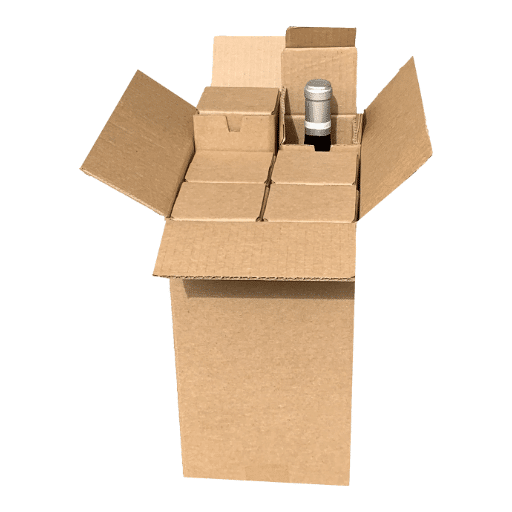
Molded pulp is made from recycled paper, cardboard, or plant fibers such as sugarcane bagasse. The fibers are mixed with water, formed in molds, and dried into rigid trays that cradle each bottle.
Molded pulp has three standout advantages. First, it is highly sustainable. Most pulp trays contain post-consumer recycled content and biodegrade in roughly 90 days. Second, it nests and stacks efficiently, saving warehouse space. Third, it performs better under compression than many people expect: pulp trays can offer 20–25 kg of compression strength, compared with 15–18 kg for EPS foam.
Cost is another win. Molded pulp inserts typically run around 0.04 pertray ,versusroughly 0.04 pertray ,versusroughly 0.06 for EPS foam. That two-cent difference adds up across thousands of shipments.
The trade-off is thermal insulation. Pulp does not insulate as well as foam, so it is less ideal for summer heat waves or frozen winter routes unless paired with gel packs or thermal liners.
Best for: eco-conscious brands, standard 750ml bottles, domestic ground shipping, and sustainable wine packaging programs.
EPS Foam Inserts
Expanded polystyrene (EPS) foam is the gold standard for protection and temperature control. It absorbs impact through controlled compression and traps air to slow heat transfer.
If you ship high-value bottles, international orders, or wine during temperature extremes, EPS foam is hard to beat. Some molded foam shippers include slots for gel packs, giving you an insulated shipping system in one piece.
The downsides are environmental and logistical. EPS is not curbside-recyclable in many areas, it does not biodegrade quickly, and it takes up more warehouse space because it cannot nest. It also costs more per unit than pulp.
Here is where the contrarian point matters. EPS foam is sometimes the most sustainable choice overall because it prevents breakage and spoilage. A bottle of vintage Cabernet saved from heat damage is less wasteful than replacing the bottle and shipping a second time.
Best for: high-value bottles, long-distance or air freight, hot climates, and shipments that need thermal stability.
Corrugated Cardboard Dividers
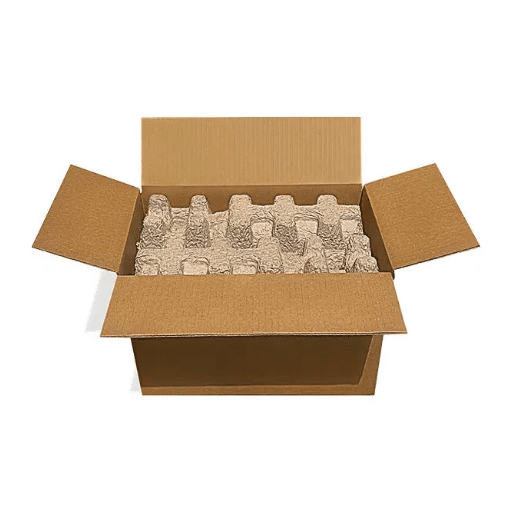
Corrugated dividers separate bottles inside a shared outer carton. They are simple, recyclable, and affordable. A 6-bottle or 12-bottle shipper with dividers prevents glass-to-glass contact and keeps bottles upright.
The weakness is shock absorption. Dividers stop bottles from knocking together, but they do not cradle the bottle as precisely as molded pulp or foam. For short local deliveries or sturdy bottles, they work well. For long-haul e-commerce, pair them with additional cushioning.
Best for: multi-bottle configurations, local delivery, curbside-recyclable programs, and budget-conscious operations.
Air Cushions and Bubble Wrap
Air cushions, bubble wrap, and inflatable column bags are lightweight void-fill options. They add shock absorption without adding much weight, which helps control dim-weight shipping costs.
Use them as a supplement, not a primary system. An air column bag inside a corrugated shipper works for single-bottle gifts. Bubble wrap layered around a divider set adds protection for mixed cases. Do not rely on loose fill alone; bottles need structure around them.
Best for: supplementary protection, single-bottle gifts, and reducing outbound freight weight.
Rigid Gift Boxes and Solid Board
Rigid gift boxes use thick paperboard laminated to a stiff core. They look premium and often become keepsakes. Customers reuse them for storage or display, which extends brand exposure.
However, rigid boxes are not designed for rough transit. They lack the cushioning and compression strength of corrugated shippers. Use them for hand-delivered corporate gifts, tasting-room sales, or premium retail, not for standard parcel shipping.
Best for: corporate gifts, luxury retail, tasting rooms, and in-person presentations.
Innovative Eco-Materials
The packaging industry is experimenting with mushroom mycelium, hemp waste, seaweed, and cornstarch-based cushioning. These materials are often home-compostable in 30–90 days and plastic-free.
Mycelium packaging, for example, is grown from agricultural waste and mushroom roots. It can be molded into custom shapes and biodegrades naturally. The global mycelium packaging market is projected to grow from roughly 85millionin2026to85millionin2026to420 million by 2030.
These materials still carry a price premium and may have longer lead times, but they send a strong sustainability message. They work best for premium brands with customers who value environmental credentials.
Best for: sustainability-first brands, premium unboxing experiences, and limited-edition releases.
Molded Pulp vs. EPS Foam: The Critical Choice
For most wine shippers, the decision narrows to molded pulp versus EPS foam. Both are excellent, but they excel in different conditions.
Protection and Drop-Test Performance
EPS foam absorbs more energy on impact. It cushions the bottle across a wider temperature range and maintains its shape after multiple shocks. Molded pulp performs well in standard drop tests, especially for 750ml bottles, but it can transmit more force in extreme impacts.
Thermal Insulation and Climate Control
Foam wins clearly. EPS traps air and slows heat transfer, which protects wine from temperature spikes. Pulp offers minimal insulation. If you ship during summer without temperature-controlled trucks, foam or a pulp-plus-gel-pack system is safer.
Storage, Nesting, and Warehouse Efficiency
Pulp trays nest inside each other, saving roughly 40% of warehouse space compared with foam. Foam shippers are bulky and cannot compress. If you store thousands of inserts, pulp frees up floor space and inbound freight capacity.
Cost Per Shipment and Total Cost of Ownership
Pulp inserts cost roughly 0.04pertray∗∗;EPSfoaminsertscostroughly∗∗0.04pertray∗∗;EPSfoaminsertscostroughly∗∗0.06 per tray. But unit cost is only part of the story. If foam prevents one extra break per 200 shipments, it can be cheaper overall. Calculate your breakage rate, average bottle value, and replacement cost before deciding on price alone.
Sustainability and End-of-Life Disposal
Molded pulp is recyclable, biodegradable, and made from recycled content. EPS foam is harder to recycle and slower to break down. For brands marketing eco-friendly wine packaging, pulp is the clear environmental winner.
When to Choose Each
Choose molded pulp when you ship standard bottles through moderate climates, want curbside recyclability, and value warehouse efficiency.
Choose EPS foam when you ship high-value wine, face temperature extremes, or need carrier insurance approval for long-distance transit.
Many wineries use a hybrid strategy: pulp for standard monthly clubs and foam for summer heat waves or international orders.
How to Match Material to Shipping Scenario
E-Commerce and Monthly Wine Clubs
For recurring shipments, you need a material that balances cost, protection, and brand presentation. A double-wall corrugated outer carton with molded pulp inserts checks all three boxes. Add custom printing to reinforce the brand every month.
Long-Distance and International Shipping
Longer transit means more handling, more drops, and more temperature variation. EPS foam or a foam-lined corrugated shipper is usually the safest bet. Make sure the shipper is ISTA-certified so carriers honor damage claims.
Hot-Weather and Summer Shipments
Heat is wine’s enemy. When ambient temperatures exceed 75°F (24°C), wine can cook in transit. Use insulated EPS foam shippers with gel packs, and ship early in the week so bottles do not sit in hot warehouses over weekends.
Marcus learned this the hard way. In July 2025, his Texas-bound shipments sat in a FedEx hub over a Saturday. Temperatures hit 98°F. Thirty-seven bottles of $45 Pinot Noir were ruined. He switched to insulated foam shippers with gel packs for summer, and his warm-weather breakage disappeared.
Premium and Gift Shipments
Premium shipments need to feel premium. Use a rigid gift box or a high-quality corrugated shipper with custom inserts, foil-stamped branding, and handling instructions. For parcel transit, protect the gift box inside a corrugated outer shipper.
Sustainable and Eco-Conscious Programs
If sustainability is a core brand value, use molded pulp, corrugated dividers, or mycelium packaging. Add a short note explaining how customers can recycle or compost the shipper. That small message turns packaging into a marketing asset.
Emma’s Willamette Valley winery did exactly that. She switched to 100% recyclable molded pulp shippers and added a printed card showing customers how to break down the box for curbside recycling. Customer emails about the change outnumbered complaints about shipping delays three to one.
Certifications and Standards to Look For
Certifications separate professional wine shippers from guesswork. Here are the most important ones to understand.
ISTA and ASTM Transit Testing
ISTA (International Safe Transit Association) publishes test protocols that simulate real shipping hazards. An ISTA 6-FedEx-A certified shipper has passed drop, vibration, and compression tests that mimic FedEx handling. ASTM standards provide additional structural and material benchmarks.
FedEx, UPS, and DHL Approved Shippers
Major carriers publish packaging guidelines for alcohol. Using an approved shipper streamlines claims if damage occurs. Check the carrier’s website for the latest approved shipper lists and labeling rules.
FSC-Certified and Recycled-Content Claims
FSC (Forest Stewardship Council) certification verifies that corrugated board comes from responsibly managed forests. Recycled-content claims should be specific, “100% post-consumer recycled” is stronger than “recyclable.”
Compostability and Biodegradability Certifications
Look for standards such as ASTM D6400 or EN 13432 for compostable materials. “Biodegradable” without a timeframe or certification is close to meaningless.
Food-Safe and Odor-Free Material Requirements
Wine is sensitive to odors. Make sure inserts and liners are food-safe and free from strong chemical smells. Pulp made from clean recycled fiber and foam from virgin resin are usually safe, but always request a material safety data sheet.
Cost Factors and Total Cost of Ownership
The best materials for wine shipping boxes are not always the cheapest per unit. Calculate total cost of ownership to make a sound decision.
Material Unit Cost vs. Breakage Cost
A 0.04pulptraylookscheaperthana0.04pulptraylookscheaperthana0.06 foam tray. But if foam cuts your breakage rate from 3% to 1%, the math changes quickly. With an average bottle value of 35,preventingtwobreaksperthousandshipmentssaves35,preventingtwobreaksperthousandshipmentssaves70, far more than the $20 difference in tray cost.
Dim Weight and Outbound Freight Impact
Bulky foam shippers increase outer box dimensions. If your carrier charges dimensional weight, foam can raise freight costs. Pulp and air cushions keep packages smaller and lighter.
Storage and Inbound Freight Efficiency
Nesting pulp trays take up less warehouse space than foam. That means lower storage rent, fewer inbound pallets, and less labor restocking the packing line.
Returns, Replacements, and Customer Churn
Every broken bottle triggers a refund or replacement, plus shipping both ways. Worse, it can cost you a subscriber. Industry estimates suggest wine damage rates average 2–5% across carriers. Reducing that rate is often the highest-ROI packaging investment you can make.
Customization and Branding Add-Ons
Custom printing, foil stamping, embossing, and window cutouts add cost but also add perceived value. Custom wine boxes can increase unboxing shareability and repeat purchase rates. Treat branding as part of the total return, not just an expense.
Sustainability Considerations
Sustainability in wine shipping is not just about materials. It is about the full lifecycle.
Recyclability by Material Type
Corrugated cardboard and molded pulp are widely curbside-recyclable. EPS foam requires specialized recycling facilities. Air cushions and bubble wrap are usually plastic film, which many curbside programs do not accept.
Recycled Content and FSC Sourcing
Choose corrugated board with high post-consumer recycled content and FSC certification. This reduces demand for virgin fiber and supports responsible forestry.
Compostable and Biodegradable Options
Mycelium, hemp, and cornstarch cushioning can be home-compostable. Verify certifications and disposal instructions. “Biodegradable” without context is greenwashing.
Avoiding Greenwashing with Verifiable Claims
Make specific, provable claims. “Made from 100% post-consumer recycled paper” is stronger than “eco-friendly.” “Certified compostable per ASTM D6400” is stronger than “biodegradable.” Customers and regulators are both getting better at spotting vague sustainability language.
At Fuzhou Longlu Packaging, we help clients choose materials with real environmental credentials and print clear disposal instructions on every shipper.
How to Source the Best Wine Shipping Materials
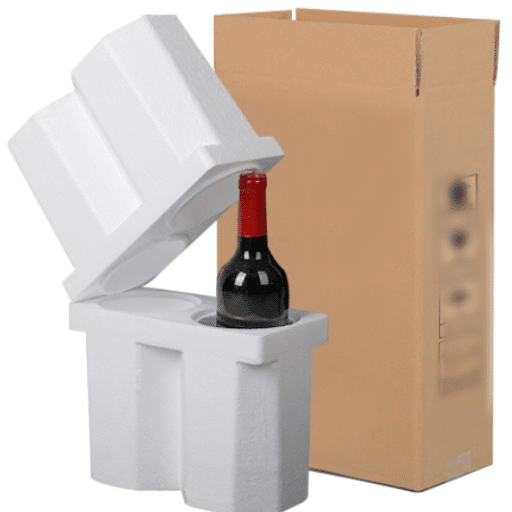
Once you know which material fits your program, the next step is finding a manufacturer who can deliver quality at scale.
Questions to Ask a Packaging Manufacturer
- What ECT rating do you recommend for my bottle count and route?
- Can you provide ISTA or carrier-approved test reports?
- What is your minimum order quantity and lead time?
- Do you offer sample prototyping before full production?
- What sustainability certifications can you verify?
- Can you match custom colors, logos, and handling instructions?
Sample Testing and Prototyping
Never commit to a full production run without testing samples. Drop the box from waist height, stack weight on it, and ship a few test cases through your actual carrier. Real-world testing beats every specification sheet.
MOQ, Lead Time, and Scalability
Small wineries and startups need flexible minimum order quantities. Large wine clubs need scalable production that can surge before holidays. A good manufacturer handles both without sacrificing quality or timeline.
Quality Control and Consistency Checks
Ask about incoming material inspection, dimensional tolerance, and batch consistency. A 2mm change in tray depth can mean the difference between a snug fit and a loose bottle.
The Fuzhou Longlu Packaging Advantage
At Fuzhou Longlu Packaging Co., Ltd., we specialize in custom packaging materials for wine and beverage brands worldwide. We combine corrugated expertise, molded pulp production, and advanced printing technology to create wine shippers that protect bottles and elevate brands. Our team works with flexible MOQs, fast turnaround times, and global logistics partners so you can scale from your first shipment to your millionth.
Ready to test the difference? Request a free sample of our molded pulp, corrugated, or foam wine shippers and see how they perform with your bottles.
Conclusion
The best materials for wine shipping boxes depend on what you ship, where you ship it, and what your customers value. Corrugated cardboard remains the foundation for most shippers. Molded pulp is the leader for sustainability and cost. EPS foam is the benchmark for protection and temperature control. Innovative materials like mycelium are opening new possibilities for premium eco-brands.
Start by auditing your current breakage rate, average bottle value, and shipping routes. Then match the material to the scenario. When in doubt, test samples with your actual carrier before committing to a full production run.
The right material does more than prevent breaks. It reinforces your brand, supports your sustainability story, and protects the margin on every bottle you sell.
Get a free quote for custom wine shipping boxes and let our packaging specialists recommend the best material for your program.
Frequently Asked Questions
What is the best material for wine shipping boxes?
The best material is usually a double-wall corrugated outer carton with a molded pulp or EPS foam insert. Corrugated cardboard protects against compression and crushing, while the insert cradles the bottle and absorbs shock. For eco-conscious brands, molded pulp is preferred. For hot climates or high-value bottles, EPS foam is often safer.
Are molded pulp wine shippers better than foam?
Molded pulp is better for sustainability, cost, and warehouse storage. It is recyclable, biodegradable, and typically costs less per tray. EPS foam is better for shock absorption, thermal insulation, and long-distance or temperature-sensitive shipping. The better choice depends on your priorities.
What does ECT mean on a wine shipping box?
ECT stands for Edge Crush Test. It measures how much force a corrugated board can withstand before crushing. Common ratings for wine shipping boxes include ECT32, ECT44, and ECT48. Higher numbers mean stronger boxes that stack better during transit.
Are wine shipping boxes recyclable?
Corrugated cardboard and molded pulp wine shipping boxes are widely curbside-recyclable. EPS foam is recyclable at specialized facilities but usually not curbside. Air cushions and bubble wrap are often plastic film and require drop-off recycling programs.
Do I need insulated packaging to ship wine in summer?
Yes, if temperatures along the route exceed 75°F (24°C) for extended periods. Insulated EPS foam shippers with gel packs are the most common solution. You can also use thermal liners with pulp shippers, though foam provides better insulation.
What is ISTA certification for wine shippers?
ISTA certification means the packaging has passed standardized transit tests, including drops, vibration, and compression. ISTA-certified shippers are more likely to be accepted by carriers for damage claims and are required by some insurance policies.