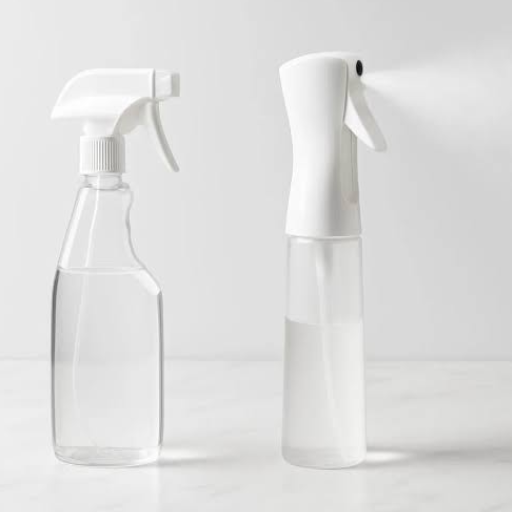
A trigger sprayer delivers a heavy, directional dose of roughly 0.7 to 1.5 ml per stroke for cleaning and household liquids. A fine mist sprayer atomises about 0.05 to 0.3 ml into a soft cloud for cosmetics and personal care. That tenfold output gap is the whole decision, and it comes down to your formula, your bottle, and who is holding it.
Both are called sprayers. Both screw onto a plastic bottle, which is why the trigger sprayer vs fine mist sprayer question sounds like a matter of taste rather than engineering. A buyer comparing quotes can easily assume the cheaper one will do, right up until the filling line runs.
Consider Nadia, a product lead at a hair care brand. She launched a heat protectant in a 300 ml bottle with a standard trigger. The formula was right and the margin was healthy. Then salon feedback arrived: stylists were soaking a section of hair in two pumps and calling the product heavy. She had specified a cleaning-grade dispenser for a cosmetic job.
This guide puts both dispensers on one table. It gives you the output, droplet, and viscosity numbers that separate them, the neck finishes you will be quoted, and the six specs to put in your RFQ.
Key Takeaways
- A trigger sprayer moves roughly 0.7 to 1.5 ml per stroke; a fine mist sprayer moves 0.05 to 0.3 ml. That gap is set by the pump, not the bottle.
- Trigger sprayers handle far thicker liquids, often ten times the viscosity a fine mist sprayer can atomise. Water-like formulas belong in a mist; gels and cleaners belong in a trigger.
- 28/410 is common to both families, which is why buyers assume they are swappable. They are not, and the mistake is expensive after filling.
- Droplet size decides how the product feels. Fine mist runs roughly 20 to 150 micrometres; trigger sprayers run 150 to 400 or more.
- The cheapest route to a custom look is often a stock dispenser with a custom overcap, not a new trigger tool.
Trigger Sprayer vs Fine Mist Sprayer: The Short Answer
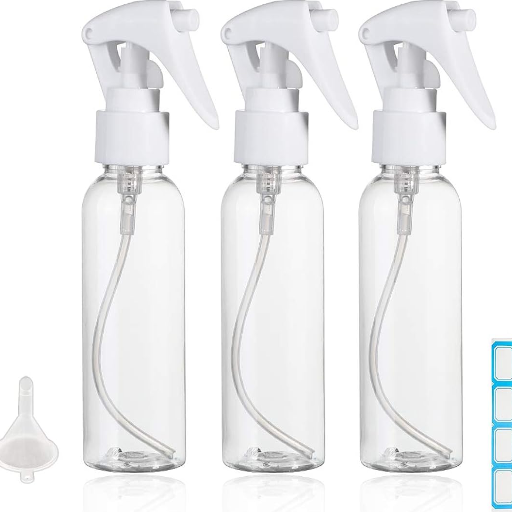
A trigger sprayer is a high-output hand pump for thick, utilitarian liquids. A fine mist sprayer is a low-output atomiser for thin, cosmetic liquids. They differ in output volume, droplet size, viscosity ceiling, bottle size, and the buyer who uses them. Neither is better. They serve different products.
That answer sounds simple, and the concept is simple. What is not simple is that both families share neck finishes, share bottle materials, and share the same generic word “sprayer” on a purchase order.
If you already know your formula and your bottle, send both to us with the target dose per stroke and we will match a dispenser sample before you commit to a run. You can request a free wholesale quote at any point in this guide.
The Difference in One Table
This is the comparison we use when a customer sends two quotes and cannot see why they differ.
| Fine mist sprayer | Trigger sprayer | |
|---|---|---|
| Best formula | Thin, water-like liquids | Thicker liquids, cleaners, emulsions |
| Typical output per stroke | 0.05 to 0.3 ml | 0.7 to 1.5 ml, up to 3 ml and beyond on large models |
| Droplet size | Roughly 20 to 150 micrometres | Roughly 150 to 400 micrometres or larger |
| Viscosity handled | Very low; suppliers quote anything from about 5 to 50 cP | Higher; standard models to about 50 cP, viscous models 80 to 300 cP |
| Spray pattern | Soft cone, short throw | Directional jet or cone, longer throw |
| Typical bottle size | 10 to 500 ml | 250 ml to 1 litre and above |
| Common neck finishes | 18/410, 20/410, 24/410, 28/410 | 28/410, 28/400, 28/415 |
| Typical buyer | Cosmetics, fragrance, personal care | Household, cleaning, garden, automotive |
| Unit cost | Lower at equal volume | Higher, because there are more moving parts |
| Recycling profile | Often mono-material PP | Frequently mixed materials and a metal spring |
Read the table top to bottom and two rows do most of the work. Output per stroke and viscosity. If you know both for your formula, the dispenser is already decided.
If you know only one, start with the formula. It is the harder constraint to change.
Output, Droplet Size, and Viscosity
What a fine mist sprayer actually delivers
A fine mist sprayer works by forcing liquid through a small orifice and a swirl chamber. The liquid breaks into fine droplets on exit. Nothing is measured in the way a pump measures a dose. The sprayer atomises.
Published output figures vary by insert and by supplier. Most cosmetic sprayers fall between 0.05 and 0.3 ml per stroke, and HCC Packaging’s dispenser guide quotes 0.05 to 0.25 ml for the fine mist family. Fragrance sits at the low end, body mist at the high end. Droplet size is usually quoted between about 20 and 150 micrometres depending on the nozzle inside.
That low output is the point. A perfume sprayer delivering 0.12 ml gives the wearer control over placement. A body mist at 0.2 ml covers an arm without soaking it.
What a trigger sprayer actually delivers
A trigger sprayer works on a piston driven by a lever. Each full squeeze moves a chamber of liquid out through a nozzle. It is a dose, not an atomisation, and the dose is large.
Standard trigger sprayers deliver roughly 0.7 to 1.5 ml per full stroke. A patent filing covering commercial trigger designs lists 0.6 to 1.5 ml with a target above 1 ml, and names models from AFA, Calmar, Canyon and Guala measuring between 0.7 and 1.43 ml. Berlin Packaging’s selection guide puts the wider range at 0.16 to 1.5 ml, with high-output models reaching 4 ml.
Those figures matter because they are not always what arrives. A study published in Invasive Plant Science and Management tested ten spray bottle brands and measured actual output between 0.85 and 3.88 ml per stroke. Several manufacturers published no output figure at all.
That variance is worth knowing if your label makes a dosage claim. Trigger output depends on how far the user squeezes, how the valve is set, and how the nozzle is bored.
Droplet size and why it decides how the product feels
Droplet size separates a mist from a squirt more reliably than output does.
Fine droplets land softly and spread. Coarse droplets hit with weight, wet a surface fast, and run. A cleaning product wants that weight and coverage. A toner does not.
A useful rule: if the user should feel a cloud, choose a fine mist. If the user should wet a surface quickly, choose a trigger.
This is also the row most often ignored on a purchase order. Output gets specified. Droplet size usually does not. Then the first production batch feels wrong and nobody can say why.
Viscosity: the thin-liquid ceiling
Fine mist sprayers are built for thin liquids. Water at room temperature is about 1 centipoise. Light fragrance oils and alcohol-based toners sit close to it. A cosmetic mist is comfortable in that range.
Push the formula thicker and the spray degrades in a specific way. The liquid stops breaking into droplets and arrives as a jet. Users describe it as spitting. Some nozzles clog at the orifice as actives dry out between uses.
Viscosity: what trigger sprayers handle
Trigger sprayers tolerate much thicker liquids. The same designs that move water will move a light gel, a surfactant blend, or a suspension, provided the internal passages are wide enough.
Specialist viscous triggers take this further. One design patent specifies a preferred high-shear viscosity of 80 to 300 centipoise, with larger internal passages to keep pressure drop manageable. That is roughly ten to fifty times the practical ceiling of a cosmetic mist.
This is why the two are not interchangeable in either direction. A fine mist sprayer cannot atomise a cleaner, and a trigger sprayer delivers far too much per stroke for a toner to feel right.
The failure modes in both directions
Most guides describe one direction of failure. Both matter.
A fine mist sprayer on a thick formula sputters, streams, or clogs. The user blames the pump.
A trigger sprayer on a thin cosmetic formula over-delivers. The product runs, the bottle empties in a week, and the customer feels cheated on value even though nothing broke.
Tomás, who runs a small cleaning-products company, made the second mistake from the opposite side. He moved a concentrate into a fine mist sprayer because the packaging looked more premium on a shelf. Customers reported needing thirty pumps to cover a worktop. He returned to a trigger within one production cycle.
The lesson is not that one dispenser is better. It is that the dispenser has to match the dose the product promises.
Bottle, Neck Finish, and the 28/410 Trap
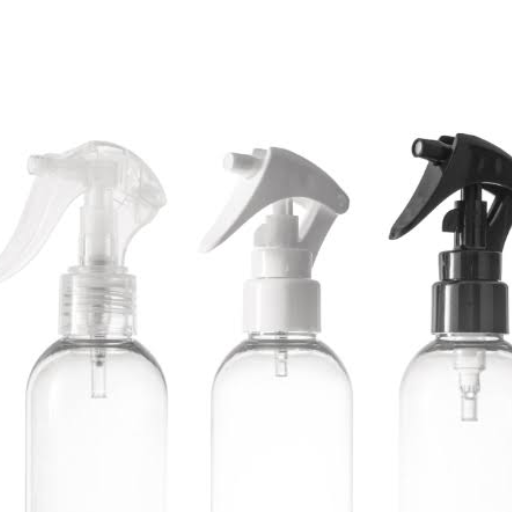
Where the two families overlap
28/410 is the finish where trigger sprayers and fine mist sprayers most often meet. It is a 28 mm thread diameter on the 410 finish series, common on bottles from roughly 250 ml to a litre.
Because both families are sold in 28/410, a buyer reasonably assumes a bottle tooled for one will accept the other. It usually will, physically. The dispenser still will not do the job.
Why the same diameter does not mean swappable
The neck code describes the bottle, not the dispenser. It tells you the thread diameter and the finish height. It says nothing about output, droplet size, or viscosity.
Two consequences follow.
First, a 28/410 trigger and a 28/410 fine mist sprayer fit the same bottle and deliver wildly different doses. Matching the neck is necessary and nowhere near sufficient.
Second, 410 and 415 share a diameter but not a height, and 400 shares the diameter with both. A 24/410 pump on a 24/415 bottle bottoms out before the gasket seals. If your trigger supplier quotes a 28/415 and your bottle is 28/410, you have a leak, not a mismatch of taste.
If you are unsure which finish your bottle has, our neck finish sizes guide covers the dimensions, the tolerance ranges, and how to measure a neck with calipers in three steps.
Which Sprayer Fits Your Product
The dispenser decision is not only technical. It follows the buyer and the channel.
Cosmetics, fragrance, and personal care
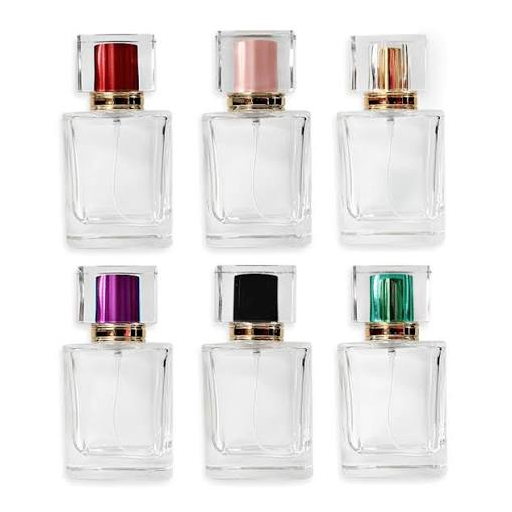
Choose a fine mist sprayer. The products are thin, the dose is small, and the user expects a cloud. Bottles usually run 10 to 250 ml and finishes are commonly 18/410, 20/410, or 24/410.
Unit economics favour the mist here. A standard polypropylene sprayer lands around USD 0.03 to 0.06 at 10,000 pieces, and decoration adds a small amount per unit on top.
Household, cleaning, and garden
Choose a trigger sprayer. The formulas are thicker, the surface is larger, and the user expects to wet something fast. Bottles run 250 ml to a litre and 28/410 is the default finish.
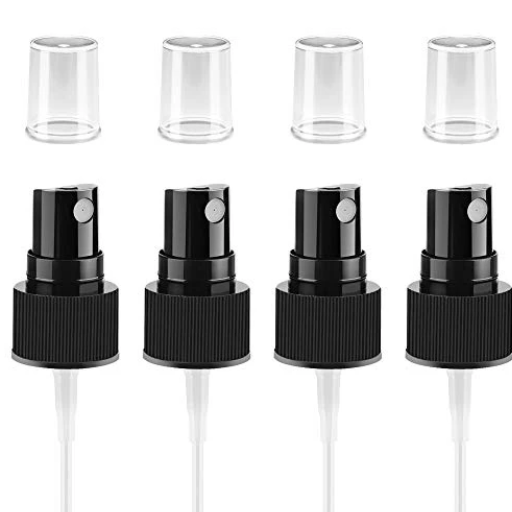
Trigger sprayers cost more per unit at the same volume because they contain more parts: a lever, a spring, a piston, a valve, and a nozzle. Expect to quote rather than assume.
The hybrid worth knowing about
There is a middle option that solves a real problem: the mini trigger sprayer.
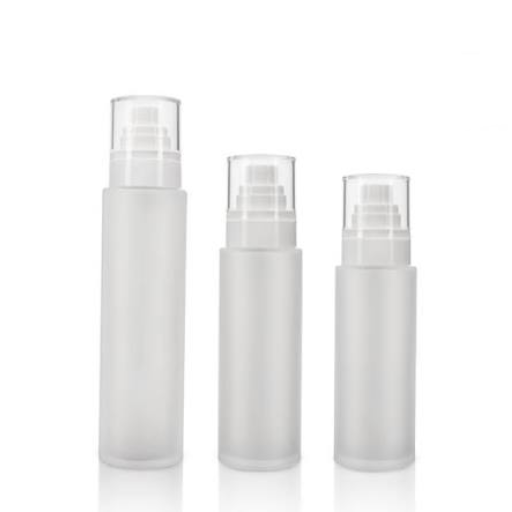
It sits between the two families. Output is lower than a full trigger and higher than a fine mist sprayer, the spray is directional rather than a cloud, and the whole assembly is small enough for a 100 to 200 ml bottle.
Hair care is where it earns its place. Leave-in conditioners and heat protectants need direction and a controlled dose, not a cloud and not a drench. The same logic applies to targeted household products and to pet care.
One caution. Mini triggers are less widely stocked than standard 28/410 triggers, so MOQ and lead time are worth confirming early rather than assuming.
Fine Mist Sprayer vs Trigger Sprayer: Cost and MOQ
What sets the price
Four things drive the unit cost of either dispenser: the body and closure material, the spring, the nozzle or insert, and the decoration.
Fine mist sprayers are usually all-plastic and simple. Trigger sprayers carry more parts and often a metal spring, which adds cost and complicates recycling.
Published minimums for fine mist sprayers run 5,000 to 10,000 pieces for standard colours, 20,000 for a custom Pantone match, and 50,000 to 100,000 for a custom mold. Trigger minimums vary more by supplier, so ask rather than assume the mist figures carry across.
If your volume is small and you want a custom look, the cheapest route is usually a stock dispenser with a custom overcap rather than new tooling.
The six specs to put in your RFQ
Send these six and you remove most of the back-and-forth:
- Viscosity in centipoise, measured on the final formula, not on water.
- Output per stroke in millilitres, as a target with an acceptable tolerance.
- Neck finish, the full code including the series, not just the diameter.
- Dip tube length, or the bottle’s inner height so the supplier can cut it.
- Decoration and closure, including overcap, child resistance, and finish.
- Test method and acceptance criteria for leak and cycle life.
Specify the formula and the bottle together. A dispenser quoted against water will behave differently against a fragrance oil or a surfactant blend.
For the wider selection picture, start with the complete fine mist sprayer guide. If you are buying at volume rather than specifying a single SKU, our wholesale fine mist sprayer guide covers RFQs, tooling, and landed cost.
Sustainability: One Difference That Matters
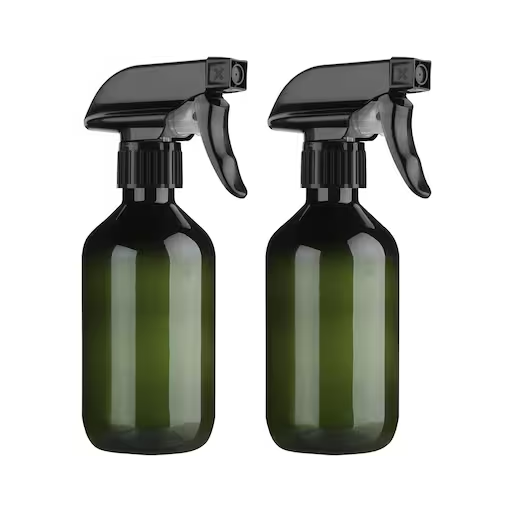
Recyclability splits the two families, and the split is mechanical rather than philosophical.
A standard fine mist sprayer is often a single plastic material, and all-plastic, metal-spring-free versions exist. Trigger sprayers are harder. The lever geometry usually needs a spring, and the nozzle assembly often mixes materials.
Regulation (EU) 2025/40, the Packaging and Packaging Waste Regulation, has applied since 12 August 2026. If you sell into the EU, recyclability of the dispensing component is now a design input rather than a marketing preference. Ask suppliers for material declarations, not adjectives. Metal-free designs are improving, but confirm availability and cost before writing either into a launch plan.
The eco-friendly fine mist sprayer guide covers PCR content and mono-material options in more detail.
FAQ
What is the difference between a trigger sprayer and a fine mist sprayer?
A trigger sprayer delivers a large, directional dose, roughly 0.7 to 1.5 ml per stroke, for thick liquids like cleaners. A fine mist sprayer atomises 0.05 to 0.3 ml into a fine cloud for thin cosmetic formulas. Output and viscosity separate them, not the word “sprayer.”
Is a trigger sprayer a fine mist sprayer?
No. Both produce a spray, but a trigger produces a coarse, high-volume spray and a fine mist sprayer produces a low-volume, finely atomised mist. They are different mechanisms with different output ranges.
Can you use a trigger sprayer for perfume or toner?
You can physically, but you should not. The output is several times too high and the droplets are too coarse. The product would soak the user rather than mist them, and the bottle would empty far faster than the label implies.
What viscosity can a trigger sprayer handle?
Standard trigger sprayers work comfortably up to roughly 50 centipoise, and viscous-capable models with wider internal passages are specified for 80 to 300 centipoise. Always test the final formula rather than relying on a published range.
Do trigger sprayers and fine mist sprayers use the same bottle?
Often yes at 28/410, which is exactly why buyers assume they are interchangeable. They fit the same neck and deliver very different doses. Check the full finish code, including the series, before assuming a swap will work.
How much does each dispenser cost?
Standard fine mist sprayers land around USD 0.03 to 0.06 at 10,000 pieces on a FOB basis, before decoration. Trigger sprayers cost more per unit because they contain more parts. Quote both against your actual specification rather than comparing headline prices.
Conclusion
The choice between a trigger sprayer and a fine mist sprayer is decided by two numbers and one bottle.
Your formula decides the viscosity ceiling. Your intended dose decides the output. Your bottle decides the neck finish. Get all three right and the dispenser follows.
To recap:
- Trigger sprayers move 0.7 to 1.5 ml per stroke; fine mist sprayers move 0.05 to 0.3 ml.
- Trigger sprayers handle far thicker liquids, so cleaners and gels belong there and thin cosmetics belong in a mist.
- Droplet size decides how the product feels, and it is the spec most often left off a purchase order.
- 28/410 fits both families, which is why the two get confused.
- A mini trigger is the middle option, and hair care is where it earns its place.
Lena learned the 28/410 lesson expensively. She assumed a 28/410 trigger would swap onto a bottle already tooled for a 28/410 mist sprayer, ordered 20,000, and found the dip tube and valve suited neither her formula nor her fill line. One sample round would have caught it.
If you have a formula, a bottle, and a target dose, send them to our team and we will match both dispensers against your specification before you commit. For failure diagnosis once a product is already in market, the fine mist sprayer troubleshooting guide covers the common causes step by step.