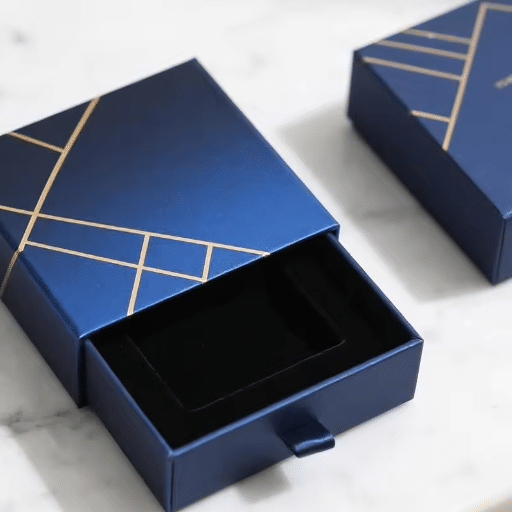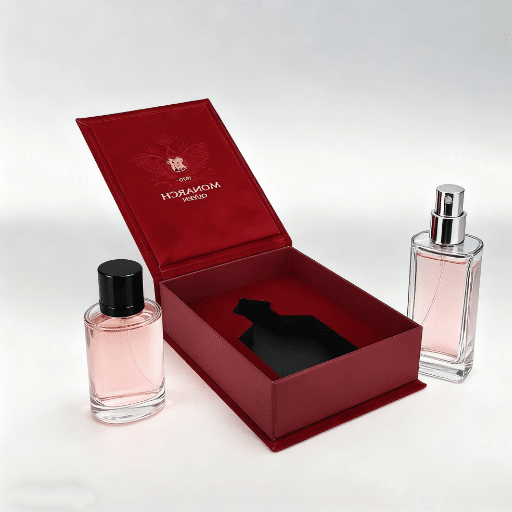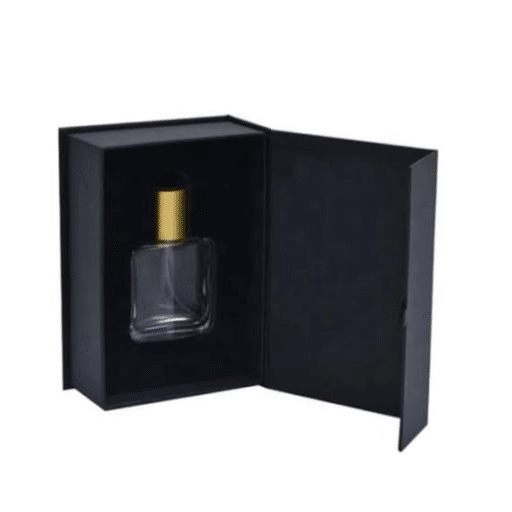

Custom perfume boxes with logo are fragrance boxes printed with your brand mark using one of four main methods: offset printing, digital printing, screen printing, or hot foil stamping. For most fragrance brands, offset printing delivers the best balance of quality and cost, while foil stamping produces the most premium result.
That’s the short answer. The longer one matters more, because your logo is the first thing a customer photographs, the first thing they remember, and the detail that turns a generic box into a brand asset.
Consider Maya, a founder who launched a small-batch fragrance line last spring. She ordered 200 boxes from a supplier that promised “full color logo printing.” The boxes arrived with her rose-toned logo shifted toward orange. The printer had worked in CMYK without ever matching her brand’s Pantone reference. She spent another $1,200 and three weeks on a reprint, and missed her launch window.
Most buyers hit the same wall. They assume a logo is just a file you upload. In reality, the method, the finish, and the color matching all change how your brand reads on the shelf.
This guide walks through every step. You’ll learn the printing and finishing options, where to place a logo, how to prepare artwork that doesn’t get rejected, and what a logo-printed run actually costs. We have also mapped where each topic links to our complete guide to custom perfume packaging, so you can go deeper on box styles and materials without repeating yourself.
Key Takeaways
- Offset printing is the workhorse for logo perfume boxes at 500+ units; digital printing is the low-MOQ option from 50 to 100 boxes.
- Foil stamping and embossing turn a flat logo into a tactile luxury cue, but they add setup cost and per-unit cost.
- Matching brand color is a CMYK vs. Pantone decision. Pantone locks a signature shade; CMYK reproduces full-color art.
- A logo needs a safe zone, a minimum size, and the right file format, or the supplier will reject the artwork.
- Budget for setup fees and dies, not just the per-box price. Costs fall sharply as order volume rises.
What Are Custom Perfume Boxes with Logo?

Custom perfume boxes with logo are branded fragrance boxes, printed or finished with your company mark on the outside panel, lid, or interior. They sit at the intersection of two buying decisions. The buyer has already decided they need custom packaging, and now they want their identity reproduced correctly.
A stock perfume box protects the bottle and says nothing about who made the fragrance. A logo box does the opposite. It names the brand, carries its colors, and signals quality before the customer ever lifts the lid. According to MakeABoxes, 79% of shoppers judge product quality by packaging, and 7 in 10 judge a perfume’s value by its box.
That’s why the logo is the most important element on the box. Every other design choice supports it.
Logo Boxes vs. Personalized Boxes
These two terms get confused constantly, so it’s worth clearing up before we go further.
A logo box carries your brand identity mark. The logo is the same on every box in the run. This is what a fragrance brand orders to ship its standard product.
A personalized box carries per-recipient information: a name, a monogram, a date, or a custom message. That’s a gifting or limited-edition play, and it usually involves variable data printing or a separate personalization step.
If you’re building your brand, you need logo boxes. If you’re creating a gift or a collector’s piece, you may want both. Our separate guide to personalized perfume boxes covers the gifting angle in detail.
Why Your Logo Belongs on Custom Perfume Boxes
The perfume packaging market is projected to reach 3.96billionin2026and3.96billionin2026and6.89 billion by 2034, growing at a 7.18% CAGR, according to Fortune Business Insights. In a market that crowded, an unbranded box is invisible.
Brand Recognition and Shelf Impact
A logo is the shortest path to recognition. When a customer sees your mark on a shelf, in a feed, or in a friend’s hand, they anchor the scent to a name. Repeated exposure turns that recognition into trust and eventually into repeat purchases.
The box is often the only surface you control completely. The bottle shape may be shared, but the box is yours.
Perceived Value and Trust
Packaging shapes how a customer prices the product in their head. The same fragrance in a plain white box reads as cheap. The same fragrance in a box with a crisp, foil-stamped logo reads as premium, and customers are willing to pay more for it.
A logo also signals that a real brand stands behind the product. That trust matters especially for indie and private-label fragrances, where the customer has no prior relationship with the maker.
Social Shareability and the Unboxing Moment
Social media now drives over 60% of product discovery, and packaging has to earn attention in 3 to 5 seconds, according to Economic Times Brand Equity. The logo is the first thing the camera sees, which makes it the first thing a viewer reads.
A well-placed logo turns every unboxing video into free advertising. That’s why so many brands now design the reveal around the moment the logo becomes visible.
If you want to see how box styles and materials support that reveal, our custom perfume packaging guide breaks down rigid, drawer, and folding carton options.
Logo Printing Methods for Perfume Boxes
There are four mainstream ways to print a logo, and each has a sweet spot. The right one depends on your order size, the complexity of your mark, and your budget.
- Offset (litho) printing is the standard for 500+ units. It reproduces full-color logos, gradients, and fine detail at the lowest per-unit cost.
- Digital printing is the low-MOQ option. It prints directly from a file, so there are no plates, making it affordable from 50 to 100 boxes.
- Screen printing lays down thick, opaque ink. It’s best for bold, flat, one or two-color logos.
- Hot foil stamping presses metallic foil onto the box with a heated die. It’s the premium choice for gold, silver, or rose-gold marks.
| Method | Best For | Typical MOQ | Relative Cost |
|---|---|---|---|
| Offset (litho) | Full-color logos, gradients | 500+ | Low per unit at volume |
| Digital | Low-MOQ launches, testing | 50+ | Higher per unit |
| Screen | Bold, flat 1-2 color marks | 200+ | Low |
| Hot foil stamping | Luxury metallic logos | 500+ | Highest |
Offset Printing
Offset transfers ink from plates to a rubber blanket, then to the paperboard. It’s the workhorse for custom printed perfume boxes because it handles full color and photographic detail exceptionally well at scale.
Setup involves plates per color, which is why offset has a higher upfront cost. That cost spreads thin across a large run, making offset the cheapest per-unit option once you pass roughly 500 boxes.
Digital Printing
Digital printing skips the plates entirely. The press prints straight from your file, which means fast turnaround and no plate fees. That’s exactly why small brands use it to test a market or launch a limited run.
The tradeoff is per-unit cost. Digital doesn’t get cheaper as dramatically as offset at volume, so most brands switch to offset once they cross a few hundred units.
Screen Printing
Screen printing forces ink through a mesh stencil onto the substrate. It produces a thick, opaque, almost paint-like finish. For a bold single-color logo on kraft or dark board, screen printing can look striking.
It’s less suited to fine gradients or photographic marks. Keep it for flat, high-contrast logos.
Hot Foil Stamping
Foil stamping uses heat and pressure to bond metallic foil to the board. Gold, silver, rose gold, copper, and holographic are all available. The result is a reflective, dimensional logo that reads as expensive.
Foil is not cheap. You pay for a custom metal die, and the process adds a per-unit cost. But for a luxury fragrance, that premium is usually justified, because it’s the single fastest way to make a logo feel expensive.
Logo Finishing Techniques That Add a Premium Feel

Printing puts the logo on the box. Finishing gives it depth. These techniques layer on top of the print to create texture, shine, and a tactile “stop and touch” quality.
Embossing and Debossing
Embossing raises the logo above the surface. Debossing presses it inward. Both create a 3D relief that catches light and invites touch.
Standard embossing depth runs 0.5mm to 1mm, with multi-level sculpted embossing reaching 2mm. To hold detail, keep embossed line width at 0.75mm or more and text at 10pt or larger.
Spot UV and Lamination
Spot UV applies a glossy coating to only the logo, contrasting it against a matte background. It’s a subtle but effective way to make a mark pop without adding color.
Lamination is a full-surface film. Matte lamination softens reflections and makes embossing stand out. Gloss intensifies color.
Soft-touch lamination adds a velvety feel. Choose based on the texture your brand wants to project.
Foil Embossing
Foil embossing combines foil stamping and embossing in a single pass. The result is a raised, metallic logo, the most premium finish available. Registration between the foil and the emboss needs to be checked closely, so ask your supplier for a proof before committing.
| Finish | Best For | Cost Tier | Typical MOQ |
|---|---|---|---|
| Offset CMYK | Full-color logos, 500+ units | $ | 500+ |
| Digital print | Low-MOQ launches, testing | $$ | 50+ |
| Screen print | Bold flat marks | $ | 200+ |
| Foil stamping | Luxury metallic logos | $$$ | 500+ |
| Embossing | Tactile, tone-on-tone logos | $$ | 500+ |
| Spot UV | Subtle gloss contrast | $$ | 500+ |
Logo Placement and Design Rules
Where a logo sits on the box is as important as how it’s printed. A strong mark in the wrong place gets overlooked.
Front Panel vs. Lid vs. Side
The front panel is the default. It faces the customer on the shelf and in photos, so it earns the most prominent placement.
The lid is a strong secondary location, especially for rigid and two-piece boxes where the top is the first surface revealed.
The side panel is for smaller, repeated marks, or for information like fragrance notes and volume. Do not bury the primary logo on a side and expect shelf impact.
Minimum Size and Clear Space
A logo needs room to breathe. Cramped marks look cluttered and print poorly.
Give the logo a clear safe zone on all sides, free of text and other elements. Keep it at least 5mm from folds and edges. And set a minimum reproduction size, because fine logo details disappear when scaled too small, especially in foil or embossing.
Matching Brand Colors: CMYK vs. Pantone
This is where Maya’s launch went wrong, and it’s the most common logo mistake we see.
CMYK builds color by mixing cyan, magenta, yellow, and black. It reproduces full-color artwork and millions of shades, which makes it ideal for logos with gradients or photography.
Pantone (PMS) is a fixed, pre-mixed ink matched to a numbered swatch. It reproduces a signature brand shade identically on every box, every batch, every time.
If your brand has one exact color, like a specific red or rose, specify it as a Pantone and request a printed drawdown on your actual board stock before production. The same ink looks different on coated, uncoated, and textured papers.
Regulatory Print Requirements
Even a logo-first box has to carry required information. Depending on your market, that includes the fragrance name, volume, batch or lot code, country of origin, and cautions. Some markets also require IFRA-compliant ingredient listings or symbols.
Plan the layout so the logo leads and the regulatory text stays legible on a side or bottom panel. For guidance on sizing the box around the bottle and its labeling, see our perfume box sizes guide.
How to Prepare Your Logo Artwork
Artwork problems are the number one reason logo orders get delayed. A few minutes of preparation prevents a week of back-and-forth.
Vector vs. Raster Files
Vector files (AI, EPS, PDF, or SVG) are built from math, so they scale to any size without losing sharpness. This is what your printer wants for your logo.
Raster files (JPG or PNG) are made of pixels. They blur when enlarged. A low-resolution JPG logo is the single most common rejection reason.
Always send your logo as a vector. If you only have a raster, ask your designer to redraw it before ordering.
Bleed, Safe Zones, and Dielines
Your printer will provide a dieline, which is the template showing where the box folds and cuts. Keep all important artwork, including the logo, inside the safe zone. Extend background colors 3mm past the trim edge as bleed.
For embossed or foiled areas, provide a separate vector layer showing exactly what gets that finish.
Common Logo Mistakes to Avoid
- Sending a low-resolution or web-sized logo.
- Placing the logo too close to folds, where it can crack or shift.
- Using a color profile that doesn’t match the print process.
- Forgetting to convert fonts to outlines, so the file opens with substituted type.
- Specifying foil or embossing without a dedicated layer or clear instructions.
Fix these before you submit, and production moves faster.
Cost, MOQs, and Lead Times for Logo Boxes

Logo box pricing is driven by three things: the print method, the finishing, and the order volume. The per-box price falls sharply as quantity rises because setup costs spread across more units.
Cost by Logo Method
As a rough benchmark, a folding carton runs 0.10to0.10to1.00 per unit, while a rigid box runs 0.75to0.75to6.00 depending on size and finish. Logo-specific add-ons stack on top. Foil stamping, embossing, and spot UV each add a per-unit cost plus a one-time die or plate fee.
Here is a concrete volume curve from a real supplier’s published pricing. A small rigid box costs about 2.10at50unitsbutdropstoroughly2.10at50unitsbutdropstoroughly0.95 at 1,000 units. The same box, the same logo, nearly 55% cheaper at volume.
Setup Fees, Dies, and Plates
Offset printing charges for plates per color. Foil stamping and embossing charge for a custom metal die. These one-time costs are why a 100-box order feels expensive and a 1,000-box order doesn’t.
Ask every supplier to itemize setup fees separately, so you can compare quotes fairly and reuse the die on reorders.
MOQ Benchmarks
Digital printing starts around 50 to 100 boxes. Offset and rigid box production typically start at 500 units. If you’re under roughly 1,000 units, a folding carton is almost always more economical than a rigid box.
For bulk buyers ordering thousands of boxes, our wholesale custom perfume boxes page walks through volume pricing, sampling, and quality control in more detail.
Ready to see what your logo would cost? Request a free quote and we will price your exact box, method, and volume, with setup fees itemized up front.
How to Choose a Logo Perfume Box Supplier
The right supplier catches mistakes before they reach print. The wrong one ships you Maya’s orange logo.
Questions to Ask Before Ordering
- Do you print CMYK, Pantone, or both, and can I get a printed drawdown on my actual stock?
- What file formats and layers do you need for foil or embossing?
- What are the setup fees, and can I reuse the die on reorders?
- What is the minimum order for my chosen method, and where does the per-unit price break?
- Can I approve a physical sample before full production?
Red Flags to Avoid
A supplier that quotes a single flat price without asking about your artwork, quantity, or finish is guessing. A supplier that won’t provide a printed proof is hiding something. And a supplier that can’t explain the difference between CMYK and Pantone won’t protect your brand color.
Sampling and Prototyping Best Practices
Always request a physical sample before a large run. A printed proof shows you color accuracy, logo placement, and finish quality in a way a digital mockup can’t. Budget for sample fees, which typically run 100to100to150, and build sample time into your launch calendar.
Frequently Asked Questions
How much do custom perfume boxes with logo cost?
A folding carton typically runs 0.10to0.10to1.00 per unit, and a rigid box 0.75to0.75to6.00. Logo finishes like foil and embossing add per-unit cost plus a one-time die fee. Volume is the biggest lever: the same box can drop over 50% in price between 50 and 1,000 units.
What is the best way to print a logo on a perfume box?
Offset printing is best for full-color logos at 500+ units. Digital printing is best for low-MOQ runs from 50 to 100 boxes. Hot foil stamping is best when you want a premium metallic finish.
What file format do I need for my logo?
A vector file, such as AI, EPS, PDF, or SVG. Raster files like JPG or PNG blur at size and are the most common reason artwork gets rejected.
Can I order custom perfume boxes with logo at a low MOQ?
Yes. Digital printing allows runs as low as 50 to 100 boxes, which is ideal for launches and market testing. Offset and rigid box production typically start around 500 units.
How do I match my exact brand color on a box?
Specify the color as a Pantone (PMS) reference and request a printed drawdown on your actual board stock. CMYK is fine for full-color art, but a single signature shade needs Pantone to stay consistent batch to batch.
Conclusion
Your logo is the most valuable element on custom perfume boxes with logo. The printing method, the finish, and the color matching all shape how that mark reads, and each decision carries a cost.
To recap: choose offset for volume, digital for low MOQs, and foil or embossing when you want a premium feel. Match your brand color with Pantone, prepare vector artwork with proper safe zones and dielines, and budget for setup fees as well as per-unit price.
The difference between a generic box and a branded one is not a file upload. It’s a series of small, deliberate choices. Get them right, and every box becomes a quiet ambassador for your brand.
Request a free quote and tell us about your fragrance. We will match the right printing method and finish to your logo, your budget, and your volume, and send a physical sample before you commit.